1Wind and kite size
For a 75-85 kg rider the season quiver is 9m and 12m.
locals call it NE/E trade winds
Direction
Direction to shore
cross-on
Dominant direction
NE, ENE, E
Kite sizes
metres · typical quiver highlighted
The quiver, in words
For a 75-85 kg rider the season quiver is 9m and 12m. In the 17-23 knot trade that runs most of the winter, an 84 kg rider is on a 10m twin-tip, or a 9m with a surfboard. The whole windy season sits inside 7-12m; 12-14m is for the light off-season and marginal mornings, and reinforced trades on the reef bring it down to 7-8m.
Character
Average strength
7 kts annual observed average at the Silver Sands Beach station for 2017-2026. That is a year-round station figure, not the kite-season riding range, and the two numbers are much further apart than the gap between a windy month and a quiet one.
Typical strength
15-25 knots is the figure most often given for the November-June season. Reinforced winter trades are reported at 20-28 knots with occasional 28-30 knot days, and quieter accounts put the everyday range at 15-22 with 25 as the top. Off-season summer is lighter and far less predictable.
Forecast
Live forecast
2Where to launch
A sandy beach about 300 m long, narrower than Silver Rock next door, with rocks at both…
three ways on to the water, and what each one asks of you
Launch
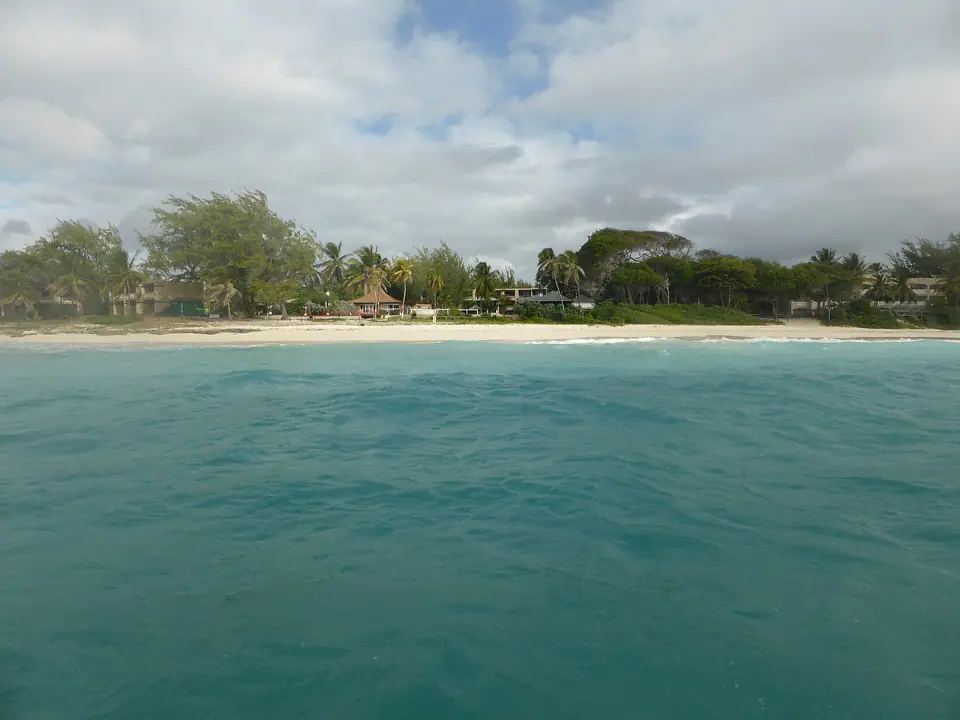
A sandy beach about 300 m long, narrower than Silver Rock next door, with rocks at both ends and coral shoreline downwind; at high tide the strip that is left is thin and needs care.Silver Rock is the main launch and the one most riders use: more room, soft white sand with no pebbles, access either through the Silver Rock hotel entrance or the Silver Rock beach car park, and parking, toilets and showers on site.Getting there means threading the residential grid of streets down to the coast, where signposting is poor.
With a school or a boat
7 schools work here
On your own
Room to launch: tight
Somewhere else
No nearby spot listed
No other spot in the atlas sits within reach of this one.
3Rules and hazards
2026: no kitesurfing permit, licence, club membership or instructor affiliation is required…
Rules & access
1 min read
- 2026: no kitesurfing permit, licence, club membership or instructor affiliation is required at Silver Sands or Silver Rock, and no beach bylaw sets kite zones there; what governs the water is convention, not regulation. 2011, still in force: the Civil Aviation (Aircraft Operations) (Amendment) Regulations make it an offence to fly a kite within five kilometres of an airport perimeter without written permission from the Director of Civil Aviation, and Silver Sands is one of the districts named in the ban alongside Thornbury Hill, Ealing Park, Wilcox, Lowlands, Coverley and Charnocks; penalties run to $50,000 or twelve months on summary conviction and $100,000 or two years on indictment. That rule is written and enforced against traditional Easter kite flying and kitesurfing has continued at the beach throughout, but the wording is broad and the runway is close, so it is not clear whether it has ever been applied to kite gear; check with local riders before you fly. 2026 local convention: Silver Sands is treated as the windsurfing beach and kiters use Silver Rock next door; stay upwind of the windsurfing zone, because a kite accelerates you downwind straight into the sails. No lifeguards are posted on either beach.
Access rules drift faster than anything else we hold — check locally, and propose an edit if this has changed.
4Schools and rescue
7 schools ride here. There is no formal rescue service on any of the Barbados kite…
Rescue
7 schools ride here
5If it is not working here
Nothing within 40 km. Surf South Point/Freights/Bathsheba depending on swell and skill, visit Oistins…
Nothing else within 40 km. The wind here is the wind you get.
Surf South Point/Freights/Bathsheba depending on swell and skill, visit Oistins Fish Fry, snorkel or dive on calmer coasts, SUP/surf with local operators, explore Bridgetown and south/west-coast beaches.
Backup spots Where riders go when the wind doesn't work here.
- Silver Rock no page yet
- Rescue Beach no page yet
- South Point no page yet
- Surfers Point / Woman's Bay no page yet
- Long Beach no page yet
- Freights Bay no page yet
 The bigger pictureEverything about Barbados
Riding essentials
Season
Nov–Jun
Best months
How windy
15-25 knots
Character: trade
Room to launch
tight
rules and access below
Water
mixed
28 °C in summerClear Atlantic water over a sand beach, with reef waves outside and flatter-to-choppy water inside the reef
Hazards
10
Reported by riders
Level
Intermediate to advanced
With a caveat: see Your level
Crowds
medium crowds · busy Dec Jan Feb Mar
Schools
7
working here
From the airport
Adams International Airport (BGI)
Transfer times under Getting there
NE and E trade winds
12:30
Two patterns circulate and they contradict each other. One has the wind up around 8 am and fading after about 12:30. The other has it building through late morning to an afternoon peak and holding to sunset, with early morning and last light the least crowded rather than the strongest. Be ready early and read the beach rather than the clock.
The mark is the clock time given for this spot, placed on a 24-hour day. The fade after it is not an end time, and not a promise of wind.
The spot
Silver Sands sits on the south coast of Barbados in Christ Church, and in practice riders…
The water
Mixed. No full wetsuit normally needed; boardshorts or rash…
Type
mixed
Standing depth
Sand bottom inside the reef, but this is not a stand-up lagoon.The reef sits somewhere between 300 and 600 m offshore depending on where you launch, and the water is well past standing depth long before you reach it.Footing exists on sand close to the beach at low water; the reef itself is sharp and is not somewhere to put a foot down at any tide.
Tides
A small range - semi-diurnal, roughly 0.5 to 1 m - so tide changes the texture more than the depth. Low water is the glassy end, with clean two-to-three-foot ramps on the inside, though it also exposes the rocks at the ends of the beach and brings the reef closer to a foil mast.High water is when the shore-break works, and on a strip this narrow that is what makes launching and landing awkward.
Temperature
28 °C summer · 27 °C winter
Wetsuit
No full wetsuit normally needed; boardshorts or rash vest/lycra for sun protection, with a shorty optional by personal preference.
Currents
Current is reported inside/around the reef and can worsen on higher tides; south-coast beaches are also reported susceptible to undercurrents.
Conditions
Who it suits
Not for beginners. For independent riding, Silver Sands/Silver Rock is best…
Your level
not for beginners here
The scene
What riders come here for
Month by month
Nov–Jun.
- Jan
- Feb
- Mar
- Apr
- May
- Jun
- Jul
- Aug
- Sep
- Oct
- Nov
- Dec
riding season given for this spot · the wind series here has no strength figure
No month-by-month share of windy days is available for this spot. The best months, according to riders and schools, are Dec, Jan, Feb, Mar, Apr, May, Jun, Nov.
Measured at Windfinder "Silver Sands Beach" station.
How this was measuredmeasured
The source listed below has no month-by-month figure for this place, so no season is drawn from it. The season shown is the one given for this spot.
Highlighted months are the riding season given for this spot.
Windfinder "Silver Sands Beach" station · windfinder.com
Rider tips
Ask which beach people are using that day.9
- Ask which beach people are using that day. Silver Rock next door is usually the easier launch and it has the parking, toilets and showers.
- Ride early or ride late for cleaner wind and fewer people, but check the day's forecast and the tide before you commit.
- Look at the reef on your first low water and remember where it shallows. It is sharp, it is not somewhere to put a foot down, and that mental map runs the rest of the trip.
- If you cannot hold your ground upwind, take instruction, or go and learn at Long Beach with a school.
- Bring your own repair kit and spare parts. Local repairs are reportedly expensive and rough.
- Wear sunblock and a rash vest. Water and air are warm all year and the sun does the damage here, not the cold.
- Stay upwind of the windsurfing zone. Silver Sands is by convention the sailors' beach, and a kite pulls you downwind into them faster than you expect.
- Bring 9m and 12m as the base quiver; the windy season sits inside 7-12m and off-season mornings can want 14m.
- January and February are the busiest weeks on the water as well as the best for waves; December and March give most of the wind with more room.
Getting there
Grantley Adams International Airport (BGI)
Airport
Grantley Adams International Airport (BGI)
Route
Fly to BGI, then take a short taxi/rental-car transfer toward Silver Sands/Silver Rock via Christ Church/Oistins roads. Public bus is possible via Oistins, but kite gear makes taxi or rental car more practical.
Transfer
About 13-15 minutes by taxi/car from BGI; bus routing via Oistins is reported around 42 minutes.
Cost level
medium-high
Staying
Self-catering apartments, villas and small hotels/guesthouses are available around Silver Sands, Inchcape, Long Beach and South Point, including walking-distance stays near Silver Rock/Silver Sands; the old Silver Sands Hotel has closed.
FAQ
When is the best time to kite at Silver Sands?4
When is the best time to kite at Silver Sands?
The season runs November through June on NE, ENE and E trade winds, with the best wave conditions typically in December through February.
Is Silver Sands suitable for beginners?
Independent beginners are not recommended; the beach is narrow, rocky downwind and lacks a formal rescue service, though schools operate nearby in the wider Silver Rock and Long Beach area.
What is the wind like?
Trade winds typically blow 15-25 knots in season, cross to cross-onshore, with local guides suggesting kites around 12-16 m depending on conditions.
What hazards should I know about?
The offshore reef is sharp, rocks line the beach ends, and current inside the reef worsens at higher tide.
Photos
3


On this page
Silver Sands has no other spot on this map within 40 km of it, and none other in Barbados. straight-line distance
Christ Church · Barbados · Oistins. also known as Silver Sands Beach, Woman's Bay
Last updated: August 2026
Sources (40)
- en.wikivoyage.org
- en.wikipedia.org
- thekitemag.com
- kitemadworld.com
- kitesurfculture.com
- kiteguide.com
- se.kiteforum.com
- se.kiteforum.com
- windfinder.com
- windfinder.com
- windguru.cz
- windguru.cz
- whenwherekite.com
- kitetrip-planner.com
- upwindkitesurfschool.com
- barbadossos.com
- endlesskiteboarding.com
- facebook.com
- briantalma.pro
- briantalma.pro
- visitbarbados.org
- visitbarbados.org
- barbados.org
- totallybarbados.com
- totallybarbados.com
- surf-forecast.com
- visitbarbados.org
- mindat.org
- windy.app
- ikointl.com
- tabularasateam.it
- tripadvisor.com
- tripadvisor.com
- rome2rio.com
- city-airport-taxis.com
- barbadospocketguide.com
- kitesurfinghome.com
- iksurfmag.com
- web.kite-and-windsurfing-guide.com
- windfinder.com