The Kitesurfing Compendium
Guides
Everything from your first lesson to advanced riding, in fourteen chapters.
Jump to a chapter14 chapters · 55 articles
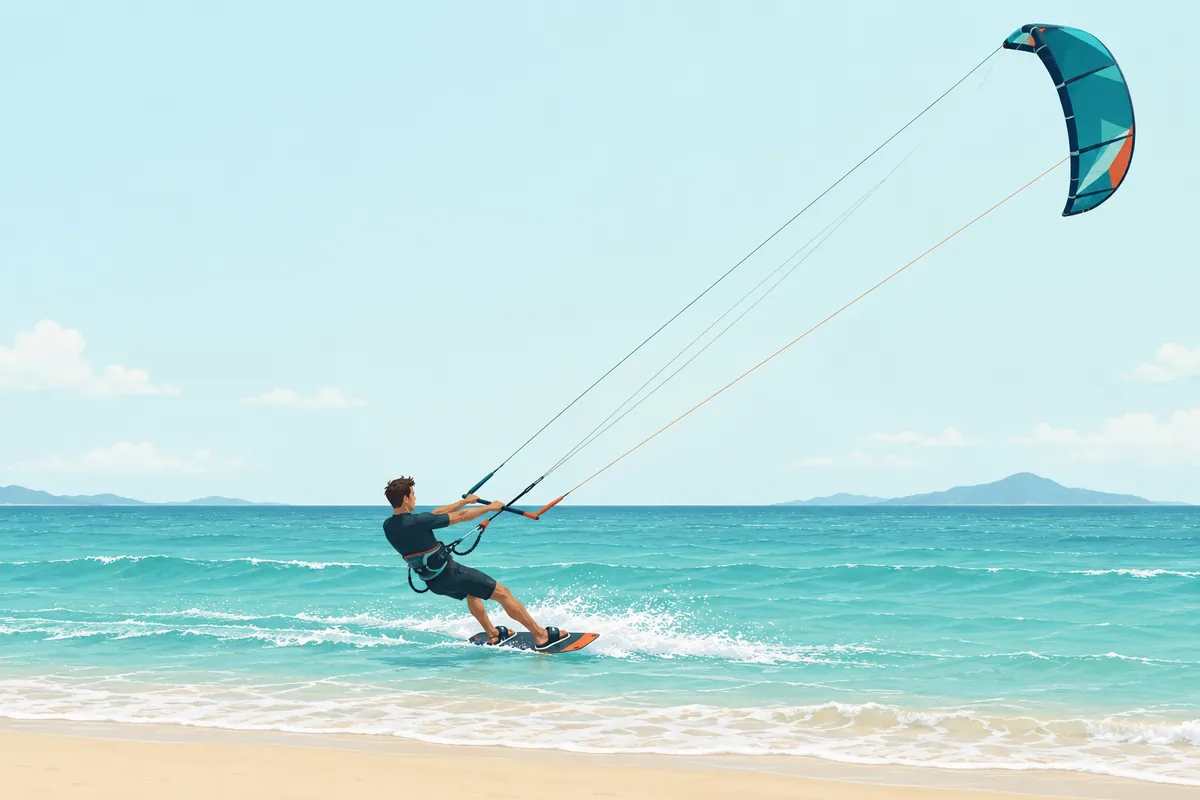
The Fundamentals
Kitesurfing is riding a board pulled by a steerable kite flown on 22–24 m lines, with a harness taking the load instead of your arms.
Read the full introduction
This chapter covers how the wind window works, what kite size to fly for your weight, how to waterstart, and how to ride upwind. Most people ride independently after 15–20 hours of tuition, 20–30 hours total time on the water.
In this chapter
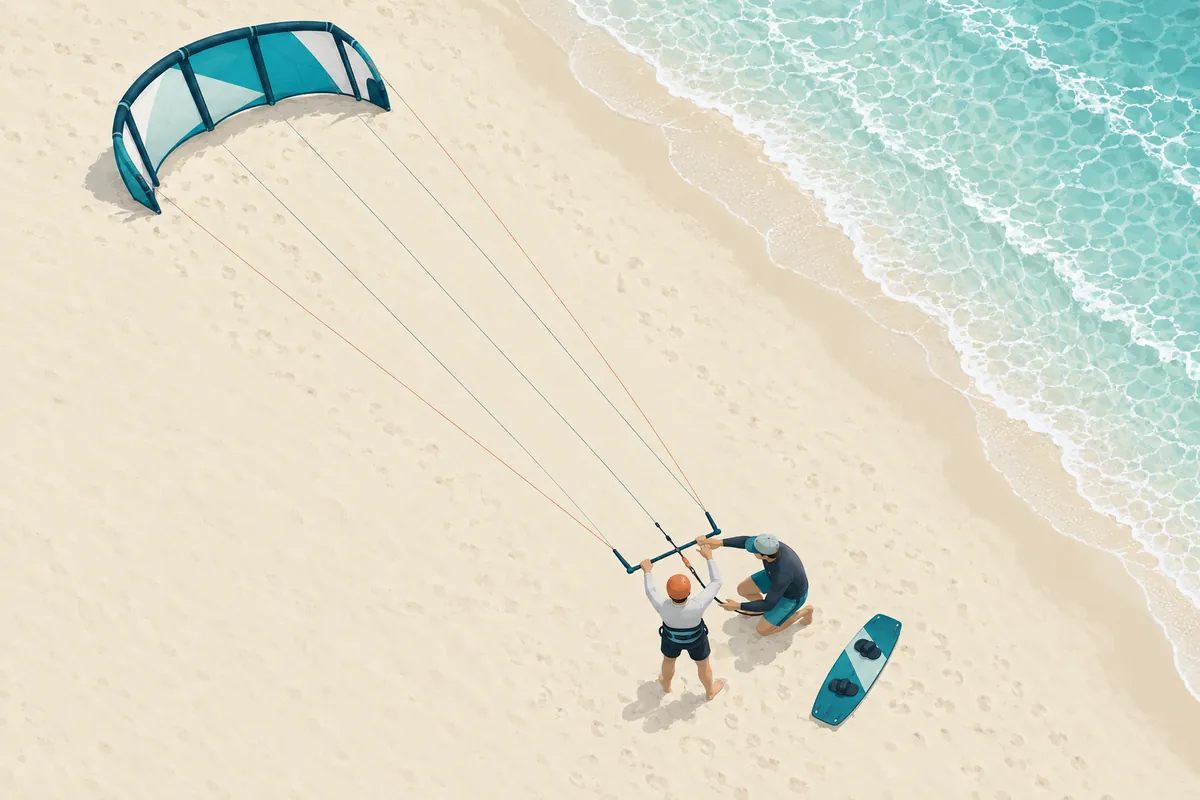
Learning the Sport
Learning to kitesurf takes most people 12 to 20 hours of lessons, spread over three to seven days.
Read the full introduction
That is what it costs to reach the level the cards call IKO Level 3 or VDWS Level 5: riding upwind, launching yourself, getting out of trouble in deep water alone. This chapter is the path from a trainer kite in a park to the day you rig without an instructor, with what lessons cost, how to pick a school, and where the water makes it quicker.
In this chapter
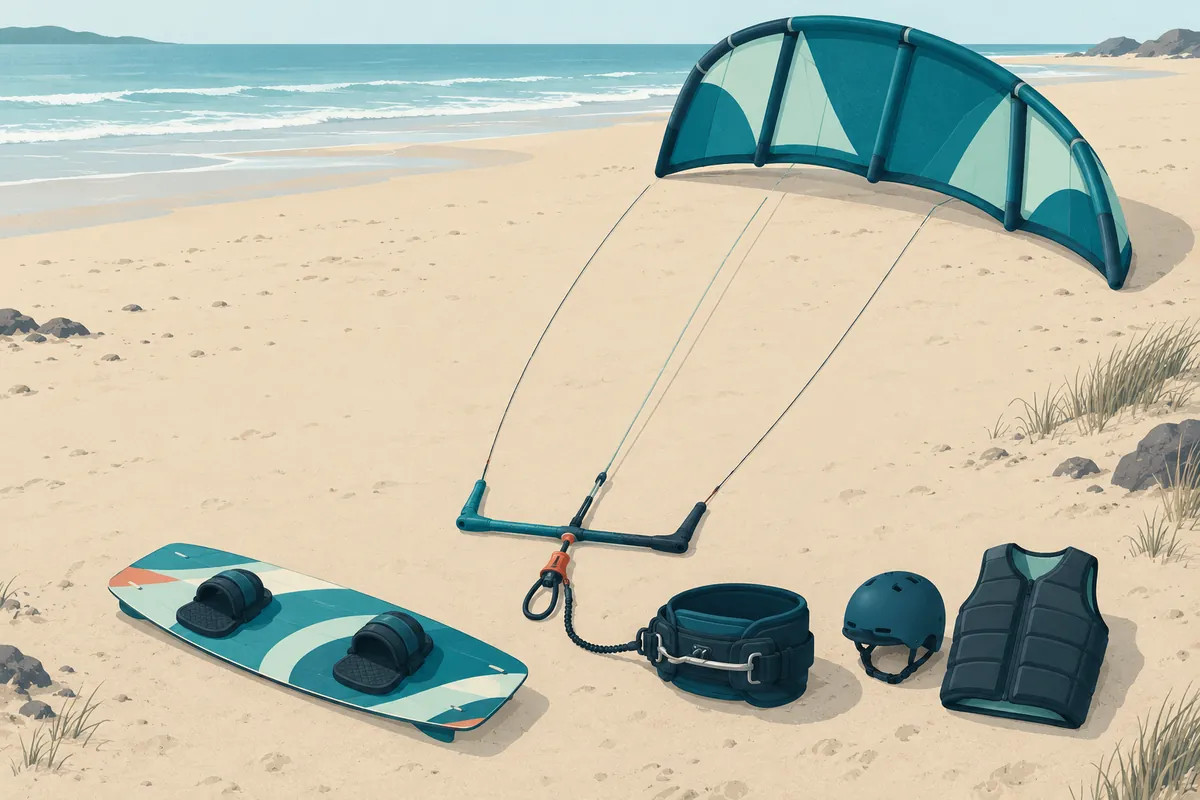
The Gear
Kitesurfing gear is five things: a kite, a control bar with its lines, a board, a harness and the safety kit.
Read the full introduction
What each part does, what kite size to buy for your weight and your wind, and what a full setup costs new and second-hand.
In this chapter
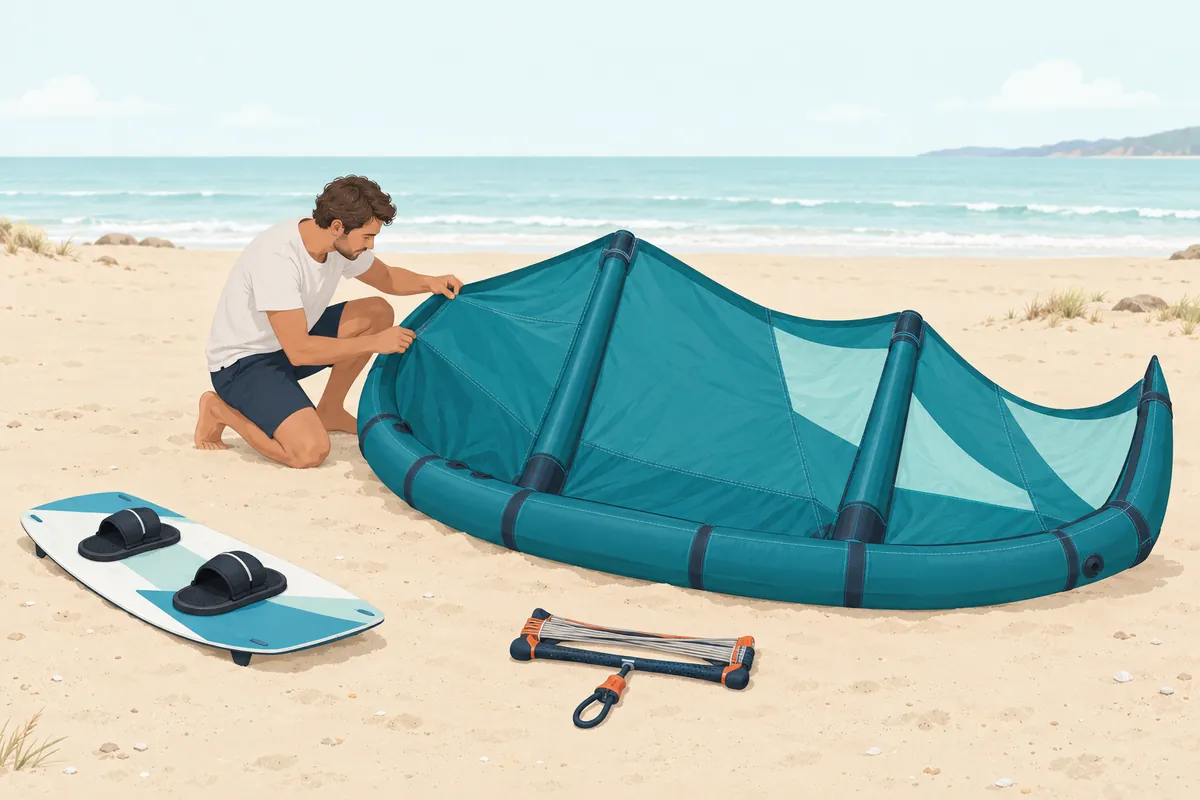
Buying Gear & Keeping It Alive
A complete new kitesurfing setup costs about $1,800–2,200 (2026); a careful used one costs $900–1,200 (2026), and it puts a beginner on the water just as well.
Read the full introduction
The order that saves the money is lessons first, then a trainer kite, then a one-to-three-year-old kite and bar you have pumped up and inspected yourself. What follows is what the gear costs, how to pick a kite size for your weight, how to inspect a used kite before you pay, and how to keep it alive for four seasons instead of two.
In this chapter
Tech & Innovation
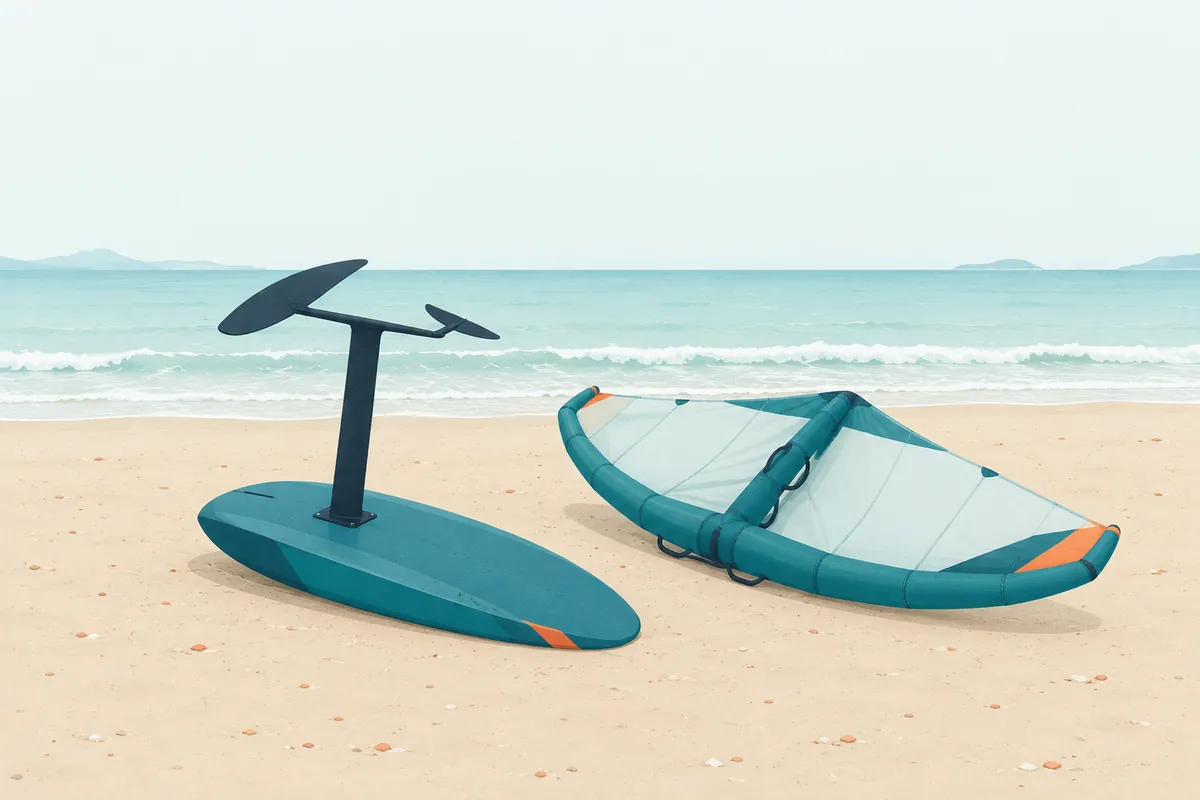
Aluula airframes, single-strut kites, hydrofoils that fly in 8 knots, wing foiling, and a quick release that has to pass an international standard: that is what changed in kitesurfing gear over the last ten years.
Read the full introduction
This chapter says what each change does on the water, what it costs, and how much of it a normal rider actually needs. The 40 m jump record and the ISO 21853 release standard are in here too, with their numbers.
In this chapter

Wind, Weather & Water
You need roughly 12 knots of steady wind to ride a twin-tip and hold upwind, and 12–20 knots is the band schools teach in.
Read the full introduction
Wind direction matters more than wind strength: cross-onshore is the safest direction at any beach, and offshore is the one that sends you out to sea. This chapter covers wind direction, kite size for your weight, gusty wind, turbulence behind obstacles, forecast models, tides and the clouds that mean land now.
In this chapter
Safety & Risk
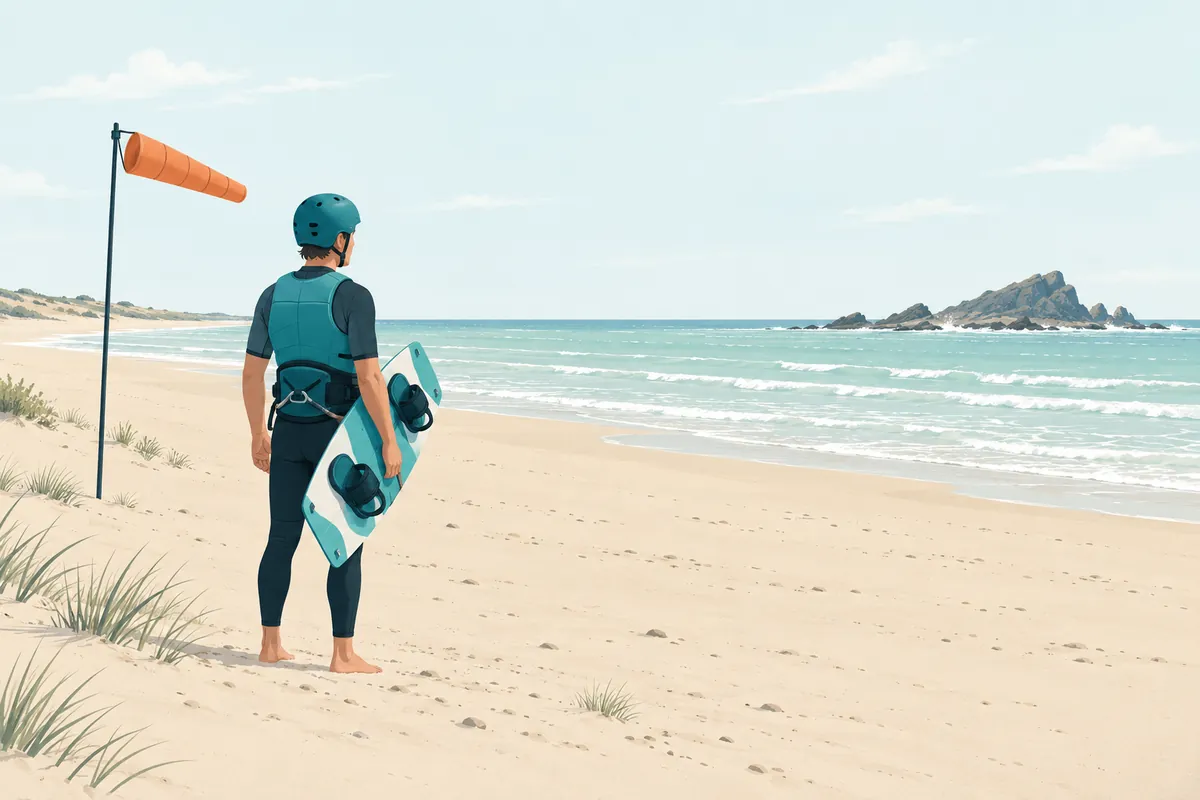
Kitesurfing safety comes down to two questions you answer before you launch: what the wind is doing, and what is downwind of you.
Read the full introduction
Per hour on the water the injury rate is low, but beginners get hurt around sixty times more often than professionals, and the fatal accidents repeat a short list of scenarios. This chapter is that list, plus the quick-release sequence, the self rescue and the pre-flight check. Read it twice.
In this chapter
When Things Go Wrong
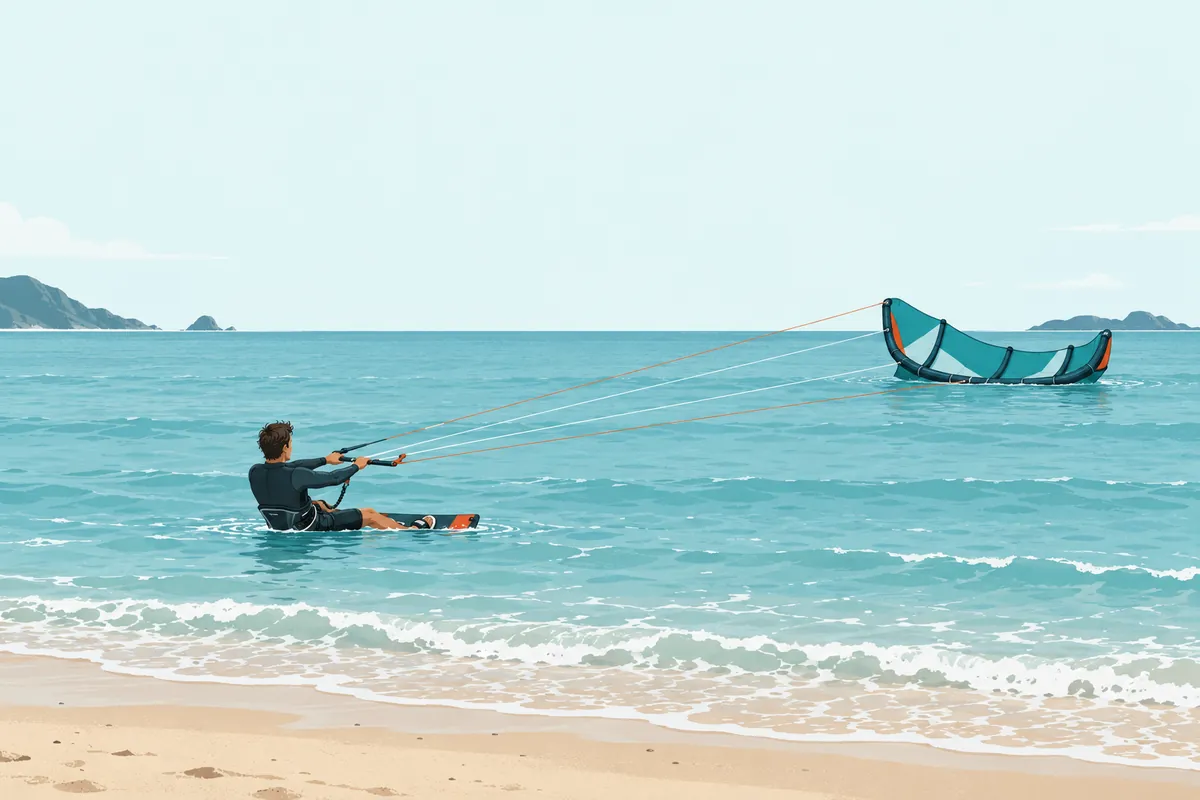
Relaunching a kite from the water, the deep-water self-rescue, and what to do when a current or offshore wind pulls you out to sea are the three long sections of this fix list for the things that go wrong on the water.
Read the full introduction
Shorter ones cover tangled lines, how to stop a death loop, a broken line or failed gear, how to body drag upwind to get your board back, squalls, how to self-land when nobody is on the beach, and getting back upwind. Every technique here is one you rehearse on an easy day, on purpose, before the day you need it. The middle of an emergency is the worst classroom there is.
In this chapter
Rules & Etiquette
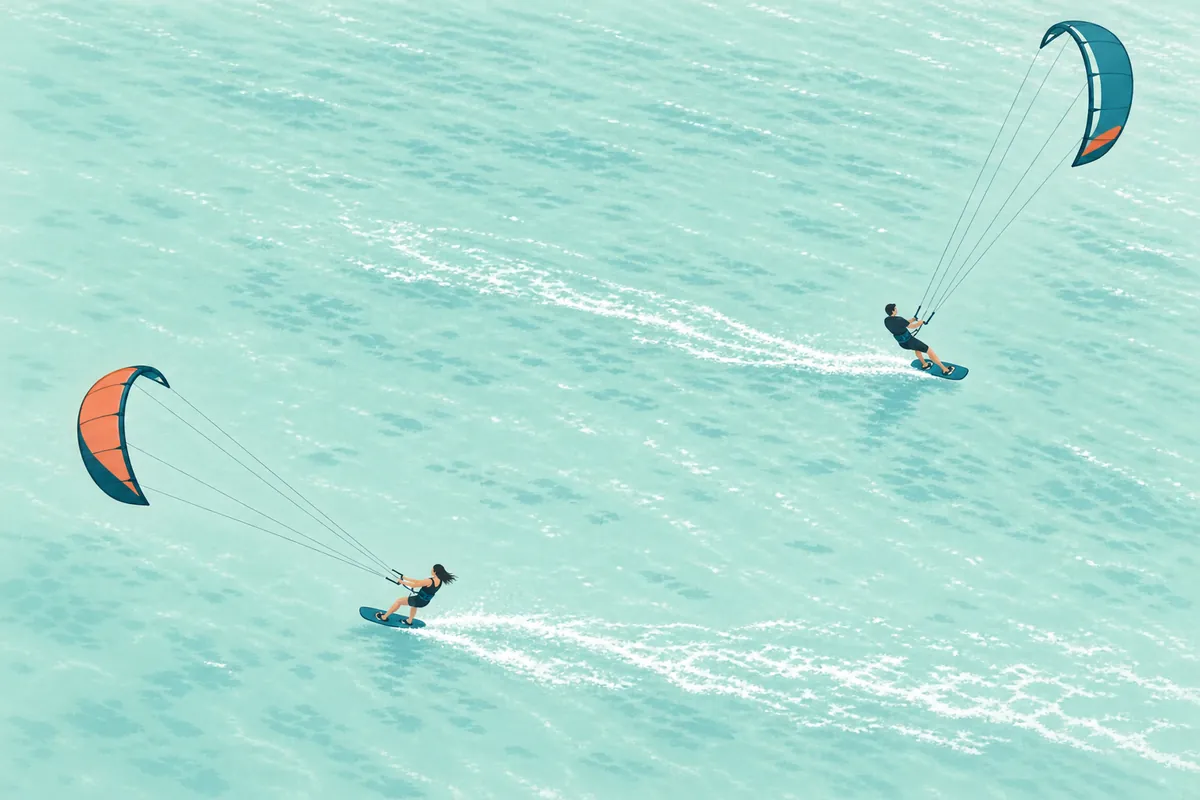
Kitesurfing has six right-of-way rules.
Read the full introduction
The unwritten half is beach etiquette: where you rig, who you help launch, how much room you leave a beginner. One principle sits above both codes. Never insist on your right of way.
In this chapter
Advanced Riding
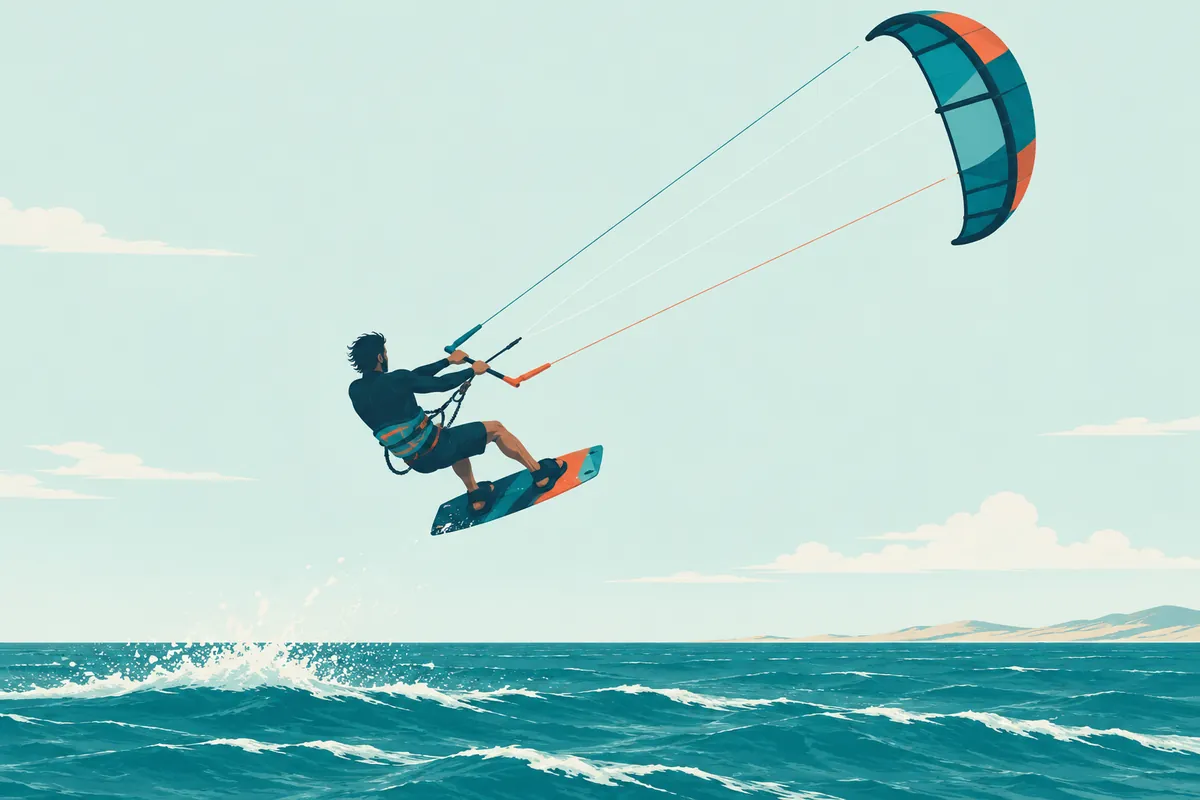
How to jump on a kiteboard, how to ride unhooked and land a raley, how to learn a kiteloop without breaking yourself, and how to train so you stop plateauing are the long sections of this ladder above riding upwind.
Read the full introduction
Shorter ones cover how to ride toeside, carving transitions, grabs, the back roll and board-offs, strapless gybes and tacks, how to get a hydrofoil flying, light-wind riding and big air competition. Every move comes with the wind range, the kite size and the water that make it easiest to learn.
In this chapter

Spots of the World
The world's best-known kitesurfing spots are the places where wind is a season rather than a forecast.
Read the full introduction
This chapter tours 25 of them region by region, with the months, the wind in knots, the water and who each spot is actually for, and it ends with the checklist for judging a spot nobody has written up. If you are picking a first kite trip, start with the shallow lagoons: Lo Stagnone, Dakhla, El Gouna, Long Bay.
In this chapter
Practical Tricks & Life Hacks
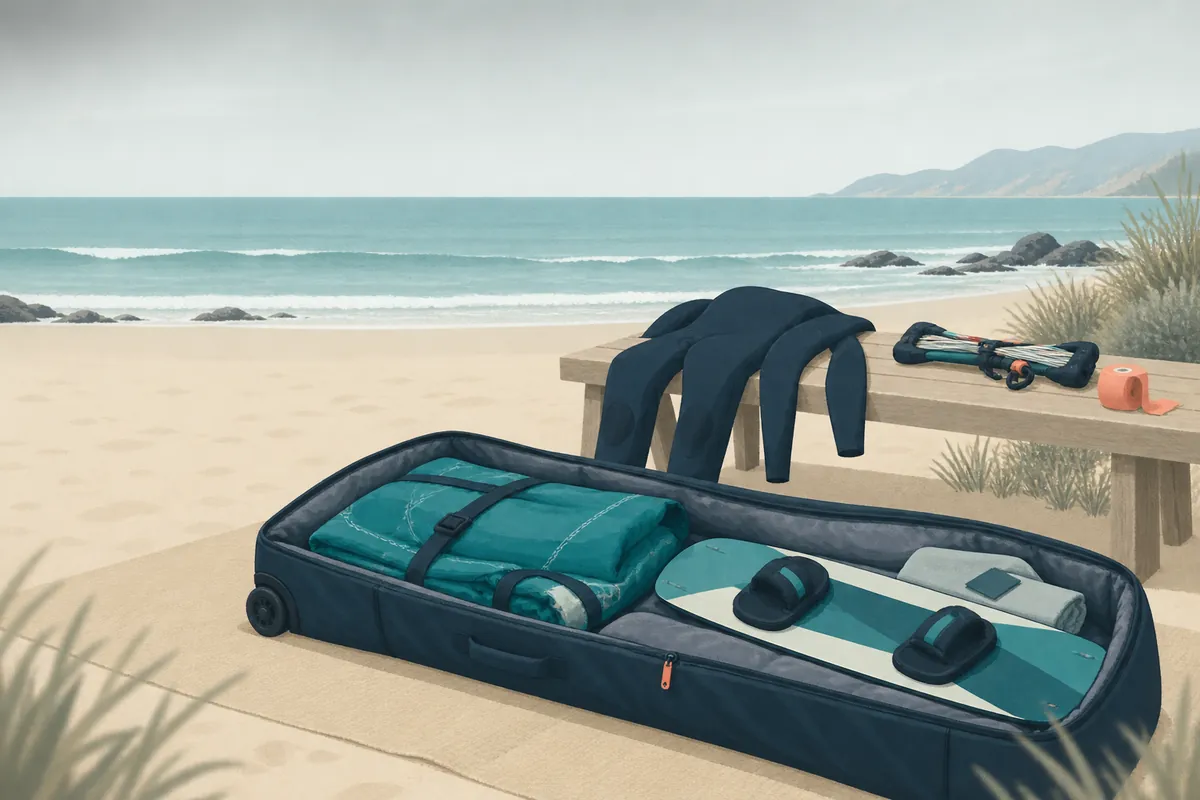
What wetsuit thickness to wear for the water temperature, how to stop the kite bar shredding your hands, what an airline charges for a kite bag, and how to make a kite last six seasons instead of three.
Read the full introduction
This is the practical side of kitesurfing that no lesson covers, and the side that decides how many days a year you ride.
In this chapter

The Video Library
The best free kitesurfing tutorials on YouTube, sorted by channel and then skill by skill: trainer kite, body drag, waterstart, riding upwind, first jumps, kiteloops, self rescue, wave riding and foiling.
Read the full introduction
Video will not teach you kite control in real wind, which is what lessons are for. From the waterstart onward it is the cheapest coaching you will ever get. Every tutorial named here plays on this page.
In this chapter
Field Notes & Extras
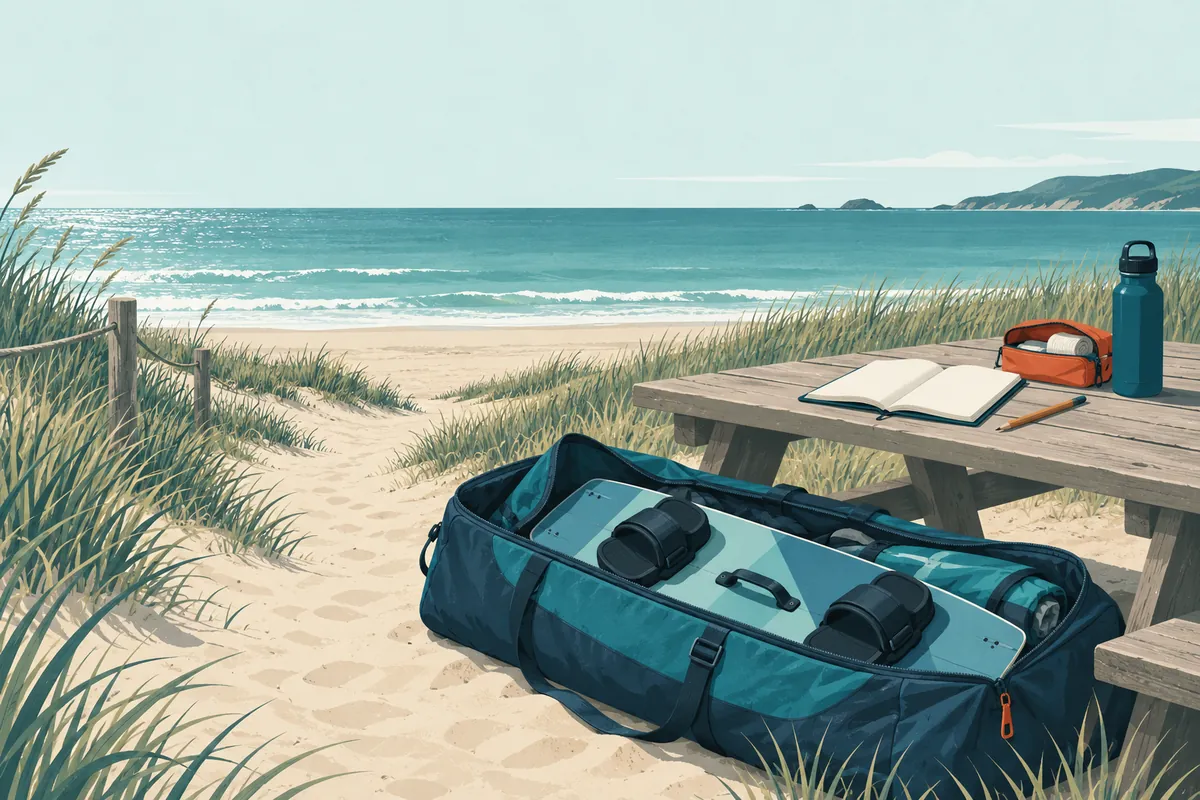
Kitesurfing physics, insurance and liability, fitness, first aid, beach access, flying with a kite bag, what the sport costs, where it came from, and the related wind sports.
Read the full introduction
This chapter covers everything that sits around the riding, one question per section. Read the section you came for; none of them depends on the others.
In this chapter
- 1Why does kite power increase with the square of wind speed?
- 2Kitesurfing competitions and the pro tour
- 3Kitesurfing insurance and liability
- 4Kitesurfing fitness and injury prevention
- 5First aid on the beach and in the water
- 6Beach access, wildlife rules and how spots get banned
- 7Planning a kite trip, from airline boardbag rules to camps and downwinders
- 8What kitesurfing costs in the first year and after
- 9Kitesurfing history, community and jargon