All 14 chapters
In this chapter
Each of these has its own pageAluula airframes, single-strut kites, hydrofoils that fly in 8 knots, wing foiling, and a quick release that has to pass an international standard: that is what changed in kitesurfing gear over the last ten years. This chapter says what each change does on the water, what it costs, and how much of it a normal rider actually needs. The 40 m jump record and the ISO 21853 release standard are in here too, with their numbers.
The first commercial inflatable kites of the late 1990s were crude and dangerous: two lines, no depower, no release. Twenty-five years later riders jump 40 m on kites built from aerospace laminate, log every session with a Bluetooth sensor, and cross over to hydrofoils and wing foils on gear that shares parts with racing yachts.
The technology is worth understanding for two practical reasons: it explains why a modern kite is far safer than a 2003 kite, and why two kites of the same size can sit $1,500 apart on the same shop wall (2026).
Aluula vs Dacron kite airframes
For about twenty years every inflatable kite was built the same way: a leading edge and struts of Dacron, a woven polyester of roughly 155–165 g/m², holding up a ripstop polyester canopy.
Dacron is cheap, it patches with a needle and a scrap of cloth, and it lasts. It is also heavy and it stretches. Under the load of a megaloop or an overpowered gust the airframe flexes, and the profile the designer drew flexes with it.
The change came from Aluula Composites, a Canadian firm whose laminate bonds ultra-high-molecular-weight polyethylene (UHMWPE) to a polymer base film. It weighs about 82 g/m², which takes 40–50% out of the airframe fabric and 25–30% off the weight of the finished kite.
In a published side-by-side load test a Dacron sample failed at 88 lb (40 kg) while the Aluula sample held to 187 lb (85 kg); manufacturer figures put the laminate at roughly six times the tensile strength per unit weight. It also barely stretches, so the airframe takes higher inflation pressure and holds the shape it was designed with.
On the water that shows up as faster turning, better upwind angles, much better drift and low end (a lighter kite flies in less wind and falls out of the sky more slowly), and more control when you are overpowered. In back-to-back testing of the Duotone Evo D/LAB (Aluula) against the Evo SLS (Dacron airframe) in 18–20 knots, testers rated the Aluula version better in essentially every category.
Ocean Rodeo got there first with its A-Series (Flite, Roam, Rise). The material then spread across the premium tier: Duotone's D/LAB line (Evo D/LAB, Rebel SLS D/LAB, Neo D/LAB), Core's XR Pro and Ozone's Edge Ultra-X all fly Aluula airframes.
Other brands built their own high-tension cloth rather than license it: North's N-Max and N-Max2 (used in the Orbit Pro), Duotone's Penta TX in the SLS ("Strong-Light-Superior") range, and Core's ExoTex rigid Dacron alternative. Adoption of UHMWPE-class fabrics reportedly grew about 50% across the 2025 model lineups.
| Property | Dacron (woven polyester) | Aluula (UHMWPE laminate) |
|---|---|---|
| Fabric weight | 155–165 g/m² | ~82 g/m² |
| Load at failure (published sample test) | 88 lb (40 kg) | 187 lb (85 kg) |
| Stretch under load | Significant; the airframe deforms | Minimal; holds its designed profile |
| Effect on complete-kite weight | Baseline | 25–30% lighter |
| Repairability | Easy to patch, well understood | Harder to patch; UV lifespan still unproven |
| Typical retail, complete kite | ~$1,600–2,200 (2026) | ~$3,075–3,700 (2026) |
The catch is money and repair. An Aluula airframe adds roughly 30% to the price of a kite, the laminate is harder to patch than woven Dacron, and its long-term UV life is still being proven in the field. Nobody has published a ten-year field study on a laminate airframe, because nobody has owned one for ten years.
Watch · 2


Are single-strut and strutless kites worth it?
Removing structure is the other route to a light kite. A normal kite has three to five inflatable struts. A single-strut kite keeps only the centre one; a strutless kite has none at all.
The benchmark single-struts are the Duotone Mono (revised canopy tension and bridle layout for 2025), the Ozone Boxer and the Airush Ultra, now in its fourth version. They are light-wind, foiling and travel kites: less weight means the kite flies earlier, drifts better and packs smaller.
The Ultra reportedly gets close to strutless drift while keeping the easier water relaunch of a single strut. The cost is the top end, where a floppy canopy flutters in gusty wind and the handling goes vague.
The cult strutless kite is the BRM Cloud, and the weights are startling: about 0.97 kg for a 2.8 m, 2.3 kg for a 13.4 m. Strutless kites turn fast and drift beautifully, which is why wave riders and foilers took to them. They also give up stability, wind range and relaunch against a three-strut surf kite such as a Cabrinha Drifter or a Duotone Neo.
Aluula partly undercut the whole category. An Aluula three-strut can approach single-strut weight without giving up the structure, so the light-wind buyer now chooses between a cheap single-strut and an expensive three-strut rather than between light and stable.
Big air kites and the world jump record
Advanced Nothing has pushed kite design harder in the last five years than big air. See the jumping chapter for the technique; this section is about the gear.
Red Bull King of the Air, held at Big Bay and then at Blouberg proper since its 2013 relaunch, turned extreme jumping into the sport's main spectacle, and a class of jump kites followed: high aspect ratio, five struts, stiff airframe, tuned for vertical lift, hangtime and kiteloops.
The current flagships are the Duotone Evo D/LAB (rated a tier above the rest for raw lift, at a 25–30% price premium), the North Orbit Pro (a competition kite: lighter N-Max2 airframe, five-point precision bridle, fast steering for loops), the Cabrinha Nitro v2, the Ozone Edge V12 (the height-and-glide reference, high aspect, five struts, hard upwind drive) and its Aluula sibling the Edge Ultra-X, the Ozone Vortex Ultra-X, and the Dutch brand Harlem with its Aluula-built Force. Core, Naish, Airush and Reedin all field a big-air model too.
Jump sensors turned height into a public leaderboard, so the progression is on record. Maarten Haeger jumped 32.0 m in March 2024. Jamie Overbeek took it to 35.3 m.
In December 2025 Hugo Wigglesworth became the first rider past 40 m, at 40.0 m (131 ft), at Kite Beach in Cape Town, riding for Flysurfer; one record in that run stood 43 days before it fell. Forty metres is about a 13-storey building.
The wind behind it is the Cape Doctor, the summer south-easter at Cape Town - Blouberg/Big Bay that runs 20–40 knots from November to March and is quoted at 25–45 knots at the peak of the season.
The spot pages for the Blouberg beaches carry those ranges beach by beach, along with the launch rules. Whether 40.0 m still stands in September 2026 is unconfirmed here; records at this level fall fast.
Watch · 2


Kite hydrofoils and light-wind riding
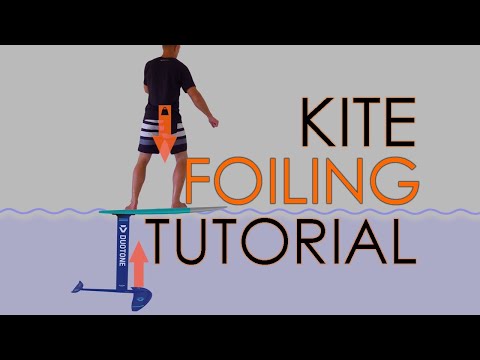
Intermediate A hydrofoil turns light wind from a compromise into a discipline. The foil is a mast of typically 75–100 cm carrying a front wing and a stabiliser; it lifts the board clear of the water and cuts drag so far that a competent foiler rides in 8–10 knots on a kite as small as 6–9 m, at speeds that pass boats and at upwind angles no twin-tip will hold.
Materials and modularity define the market. Full-carbon masts and wings sit at the performance end; aluminium-mast packages keep entry prices sane. The Italian brand Sabfoil (formerly Moses) builds the modular Kraken mast system with a tool-free quick release for moving a foil between boards.
Lift Foils, Levitaz, F-One, Naish, Slingshot, Duotone, North, Cabrinha and Airush all sell modular wing ecosystems: one mast and fuselage, front wings swapped small and fast for racing or big and slow for cruising and waves. The newer work goes into carbon-nanotube-reinforced layups, and into bio-resins and recycled carbon.
The kite end split too. For everyday foiling the light single-strut inflatables above are the easy answer. At the elite end sit ram-air foil kites: twin-skin, bridled, strutless soft kites with glider-like efficiency. Ozone's Chrono, launched in 2014, put water-relaunchable closed-cell foil kites in freeriders' hands; the Flysurfer Soul is the freeride benchmark; the Ozone Hyperlink V3 straddles both worlds.
Racing is foil-kite-only in practice: since about 2012, starting with the Russian brand Elf and its Joker, race courses have belonged to high-aspect ram-air kites, and the Formula Kite class, a hydrofoil board plus a registered ram-air kite such as Ozone's R1, was an Olympic discipline at Paris 2024. An Ozone team rider reportedly held the WOO record briefly on an R1 V4 race kite in nuking wind.
Waist-deep flat water is the place to learn it, not open sea. Langebaan, the lagoon riders pair with a Cape Town trip, is one of the destinations the atlas flags for foiling as well as for beginners; its page also says what the town does not have, which is a nightlife.
Watch · 1
Wing foiling vs kitesurfing
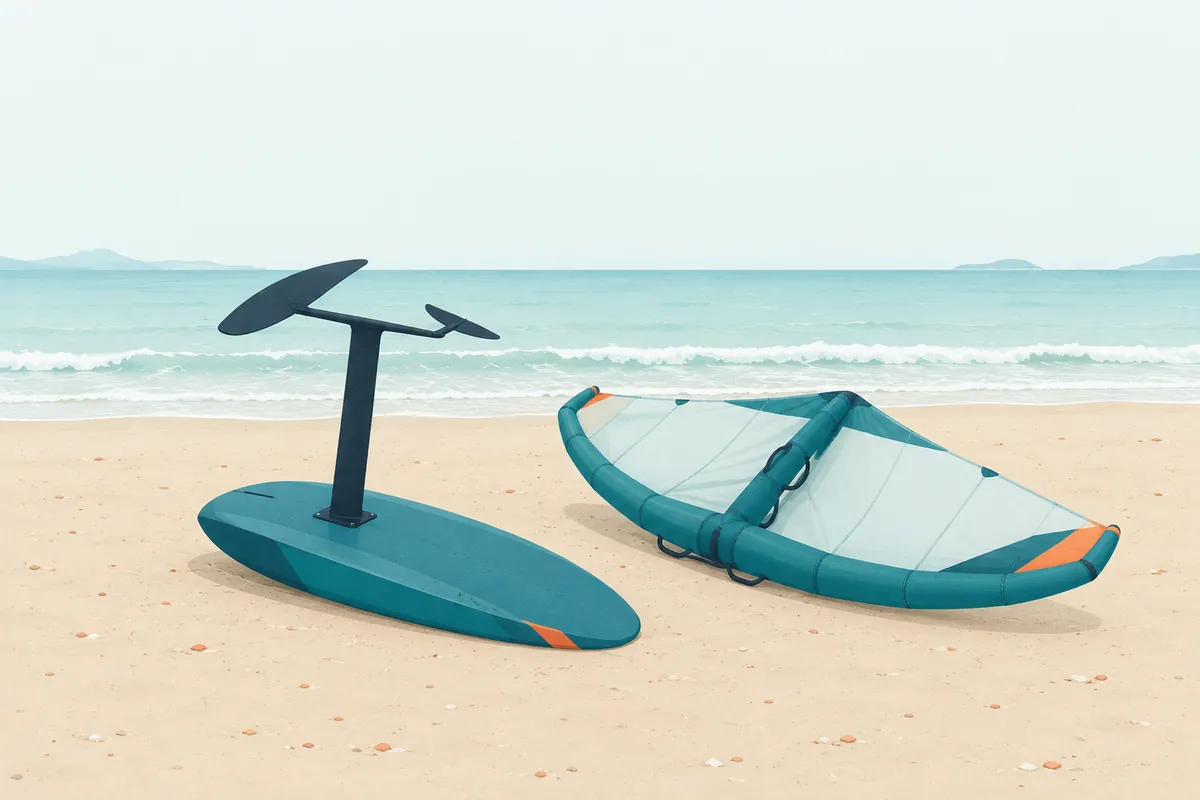
Around 2019 the same manufacturers put a handheld inflatable wing over a hydrofoil board and wing foiling took off. The appeal is practical: no lines, almost no launch space, easier self-rescue, and access to gusty inland water that is marginal or dangerous on a kite.
Duotone, North, F-One, Ozone, Cabrinha, Naish and Armstrong all run a wing division now, and the technology moves both ways. Aluula airframes appeared in wings before they were common in kites, and foil development for winging feeds straight back into kite foiling. Hybrid harnesses meant to work for both sports are in development.
For the kite industry winging is competitor and complement at once. In 2025, reportedly one of the worst wind years in recent memory, which favours whichever sport has the lower wind floor, wing gear outsold kite gear at many retailers.
The two look more like a converging "wind foiling" market than a fight to the death: a large share of wingers are current or former kiters, and plenty of riders now travel with both. Nobody has published clean 2026 sales numbers either way.
Kite quick release systems and the ISO 21853 standard
Beginner The safety story is the part of this chapter that matters most to a new rider, because the history is the reason the modern release works the way it does.
- Late 1990s to early 2000s. Two-line bars, no depower, no release. A rider was effectively locked to a powered kite. Accidents were frequent and some were fatal.
- Mid-2000s. Four-line bars with a chicken loop hooked into a waist harness put the load on the body and let you sheet the bar out to depower. The first quick releases arrived, but the designs were proprietary and inconsistent, and they jammed under load or with sand in the mechanism.
- 2010s. The push-away quick release won. Shove the collar away from you, the chicken loop opens, the kite flags out on a single safety leash line, and the pull drops to near zero. By about 2015 every major brand had converged on that logic, and below-the-bar swivels, low-V splits and auto-untwist loops cleaned up the details.
- 14 February 2020. ISO 21853, the international standard for kiteboarding release systems, came into force after six years of work by the GKA with an international engineering team. A release passes if it opens with no more than 170 N of force and in no more than 2 seconds, tested dry, sandy, wet-sandy, in fresh water, and cold and wet. Certification runs at two independent facilities, the Fraunhofer Institute in Rostock and Camosun in Victoria, Canada, and a compliant release carries the ISO number embossed on the hardware.
The hardware standardised and so did the teaching. Learn this sequence as muscle memory, in order, before your first solo session.
- Let go of the bar. It feels wrong and it is right: letting go sheets the kite out and dumps most of the power at once. The large majority of scary moments end here.
- Release the chicken loop. Push the quick-release collar away from you. The loop opens, the kite flags out onto the single safety-leash line, the pull drops to near zero, and the kite stays attached so you can recover it.
- Release the leash. Last resort, for when the flagged kite is still a danger: lines wrapped around you, or the kite dragging you at something hard. This separates you from the kite completely.
For a buyer the guidance is short. Any current bar from a major brand, Duotone Click Bar or Trust Bar, North Navigator, Ozone Contact, Core Sensor, Cabrinha Overdrive, uses a tested push-away release. Buying used or off-brand, the ISO 21853 marking on the hardware is the box to check.
Watch · 2


How kite jump height is measured
Kiting got its own quantified-self movement, and it changed how riders talk to each other on the beach.
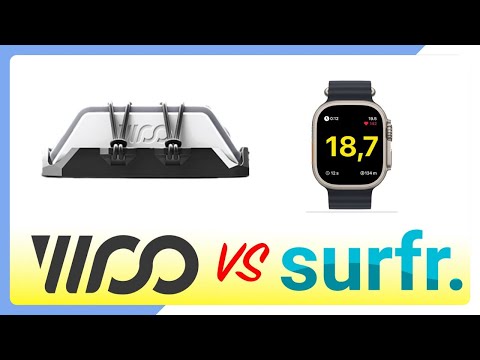
WOO Sports built the category in 2013: a matchbox-sized motion sensor that mounts on the board and logs every jump on its own, height, airtime, landing g-force and a jump-shape graph, synced over Bluetooth to a phone app with global leaderboards, a spot map and challenges.
The current WOO 4.0 adds a ruggedised housing, a faster processor and a more precise IMU, wireless charging and 24+ hours of battery. WOO became the de facto ruler for big air, which is why the 32 m, 35.3 m and 40.0 m marks above are all WOO records, and its community has logged over 150 million jumps across 2.7 million sessions.
PIQ, a multi-sport sensor backed by North and Duotone in the mid-2010s, was the main rival, board-mounted with similar jump metrics, and has since faded from the market. Head-to-head tests in 2016 had the two disagreeing on absolute height by a metre or more. Sensor numbers compare inside one ecosystem, not across two.
Watch apps are where the growth is now. Surfr turns an Apple Watch, or one of roughly 91 supported Garmin models, into a jump tracker with live height and airtime on the wrist, plus GPS speed and distance, a downwinder mode and a friend alarm.
Hoolan does free session tracking and analysis for kiters, wingers and windsurfers on Apple Watch and Garmin. Sessions Surfsports adds 3D GPS replays. Garmin's own watches log kiteboarding natively, and GPS speed traces feed the speed-riding leaderboards.
Forecast apps and live wind stations finish the toolkit, and nobody drives to the beach blind any more. The cultural effect is real and mixed: "how high did you go" now has an objective answer, and chasing a leaderboard has measurably pushed big-air progression, sometimes into a crowded record spot where a 30 m attempt has no business being.
Watch · 1
What is coming next in kite gear
Four trajectories are visible in the current market, plus one that is mostly a hope.
- Laminates trickle down. Exotic cloth is where carbon fibre was two decades ago: flagship-only, then everywhere, as volumes rise and patents diversify. Expect standard kites to shed 20–30% of their weight over the next few product cycles, which widens the usable wind range at both ends. Light-wind-capable gear reportedly already accounts for around 22% of kite sales.
- Sustainability, slowly. Duotone's Concept Blue programme, with bio-based bladders, recycled plastics and undyed canopies, points at recyclable thermoplastics, bio-resins and recycled carbon across the industry. It matters because a dead kite is otherwise close to unrecyclable. It is also the trajectory with the least evidence behind it so far.
- Wind foiling converges. Kite, wing and foil ecosystems increasingly share masts, wings, boards, harnesses and R&D budgets. The rider with one foil quiver and several power sources is becoming normal.
- Big air stays the flagship. With 40 m broken in December 2025 and records falling weeks apart, purpose-built big-air kites and the formats behind them, King of the Air and the GKA Big Air tour, will keep driving airframe stiffness, weight reduction and release reliability.
- Gear gets instrumented. Watch tracking is displacing dedicated sensors for casual riders, while live telemetry, session sharing and app-linked coaching such as the Duotone Academy blur the line between equipment and instruction.
One line runs through all of it. Depower, the push-away release, ISO 21853, lighter airframes, foils, wings: each one made the sport more extreme at the top and easier at the bottom at the same time. The 40 m jump and the 8-knot foil session came out of the same decade, and largely out of the same factories.
Questions riders ask
Is an Aluula kite worth the money?
It adds roughly 30% to the price and takes 25–30% off the weight. That pays at the margins: sub-12-knot days, 30-knot boosting, travel weight. In steady 15–20 knots a Dacron kite gives up very little, and it patches more easily when you put a strut through a fence post.
What is the kitesurfing world record jump height?
40.0 m (131 ft), set by Hugo Wigglesworth in December 2025 at Kite Beach in Cape Town: the first jump past 40 m on a WOO sensor. Records at this level fall within weeks of each other, so check the leaderboard before quoting it.
How much wind do you need to kite foil?
A competent foiler rides in 8–10 knots on a 6–9 m kite. The mast is usually 75–100 cm, and flat shallow water makes learning far less punishing than open sea.
What is ISO 21853?
The international standard for kiteboarding release systems, in force since 14 February 2020. A release passes if it opens with no more than 170 N of force and in under 2 seconds, tested dry, sandy, wet and cold. Compliant hardware carries the number embossed on it, which is what to look for when buying used.
Single-strut or three-strut kite?
Fewer struts give low end and drift; more struts give top end and easier relaunch. If your home spot is gusty above 20 knots, a single-strut is the wrong kite however light it is.
Is wing foiling replacing kitesurfing?
Wing gear outsold kite gear at many retailers in 2025, a poor wind year that favoured the sport with the lower wind floor. A large share of wingers are current or former kiters and many ride both, so the two are converging rather than one killing the other.
Chapter 06 · Part III · Wind, Water & Risk