Map › Guides › Field Notes & Extras › Beach access, wildlife rules and how spots get banned
The Kitesurfing Compendium · Field Notes & Extras
Beach access, wildlife rules and how spots get banned
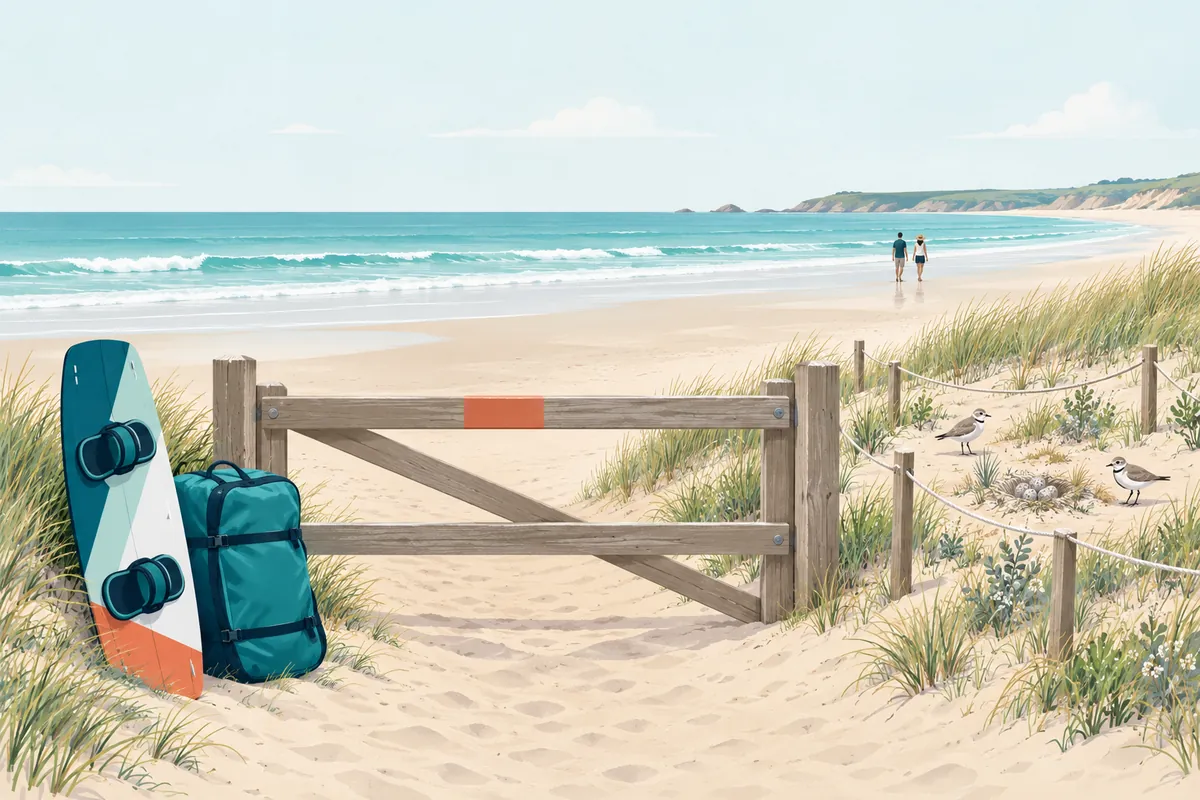
Kitesurfing spots close for two reasons: wildlife impact and conflict with other beach users. Both are inside riders' control, which makes beach access the one risk in this book you manage collectively rather than alone.
Birds read a kite as a predator. A fast-moving object overhead triggers flight responses in shorebirds at far greater distances than a walker or a swimmer does, and repeated flushing burns the energy reserves migratory birds need and can cause nest abandonment.
That is why many reserves ban any airborne device within about 200 m of posted nesting zones, and why seasonal closures exist: parts of the US coast close to kites during shorebird nesting windows such as 15 March to 15 October, and Cape Cod National Seashore has rewritten its kite rules more than once after conflicts with protected plovers and terns.
The atlas is full of the same pattern in miniature. Perth - Safety Bay has marked bird-nesting exclusion zones near the Pond. On the Hel Peninsula, Puck Bay includes bird-protection zones, so parts of the lagoon carry seasonal or spatial restrictions.
Fuwairit fences off large stretches of coastline for turtle nesting every year from 1 April to 1 August. Bonaire bans kitesurfing inside Lac Bay and Sorobon entirely, which is why kiters ride at Atlantis Beach instead.
Municipal rules follow predictable patterns. Designated launch and landing corridors, buffer distances from swimmers, anglers and piers, with 150–200 ft a common figure in the United States, seasonal or hours-based zoning at busy European beaches, and leash or insurance requirements. In Tarifa, Los Lances and Balneario run designated kite zones with lifeguard flag enforcement in July and August, and riding outside the marked zone gets you moved on.
In Mellieħa, northern Malta, kiting is restricted to specific zones and hours through the guarded swimming season. Ten minutes reading the spot page, the signage or the club website before your first session is part of rigging: 1,314 of the 1,504 spots in the atlas carry a dated rules note and 1,496 carry a hazards list.
The advocacy layer matters. The Global Kitesports Association runs a beach-access and environment programme, but the front line is the local kite club. Clubs negotiate with councils, mark corridors and give authorities a responsible counterparty. Joining yours, even if you never attend anything, funds the people keeping your spot legal.
How not to get a spot banned
- Launch and land only in the designated corridors, and keep your kite low and brief over the beach.
- Respect wildlife closures absolutely. Ride 200 m clear of posted nesting areas and never fly over dunes or roosting flocks.
- Give swimmers, anglers and other craft an obviously generous margin. The perception of danger closes spots as surely as actual incidents do.
- Self-police. One friendly conversation with a visiting rider breaking the rules is worth more than any sign.
- Leave nothing behind: line offcuts, tape and dead bladders come home with you. Use reef-safe sunscreen, recycle old neoprene through a take-back scheme, and share cars into cramped parking areas.
More from Field Notes & Extras
The other articles in this chapter- Why does kite power increase with the square of wind speed?
- Kitesurfing competitions and the pro tour
- Kitesurfing insurance and liability
- Kitesurfing fitness and injury prevention
- First aid on the beach and in the water
- Beach access, wildlife rules and how spots get banned
- Flying with kite gear and planning kite trips
- How much does kitesurfing cost?
- Kitesurfing history, community and jargon
The Fundamentals · Learning the Sport · The Gear · Buying Gear & Keeping It Alive · Tech & Innovation · Wind, Weather & Water · Safety & Risk · When Things Go Wrong · Rules & Etiquette · Advanced Riding · Spots of the World · Practical Tricks & Life Hacks · The Video Library · Field Notes & Extras