Map › Guides › Rules & Etiquette › Where to rig, launch and park your kite
The Kitesurfing Compendium · Rules & Etiquette
Where to rig, launch and park your kite
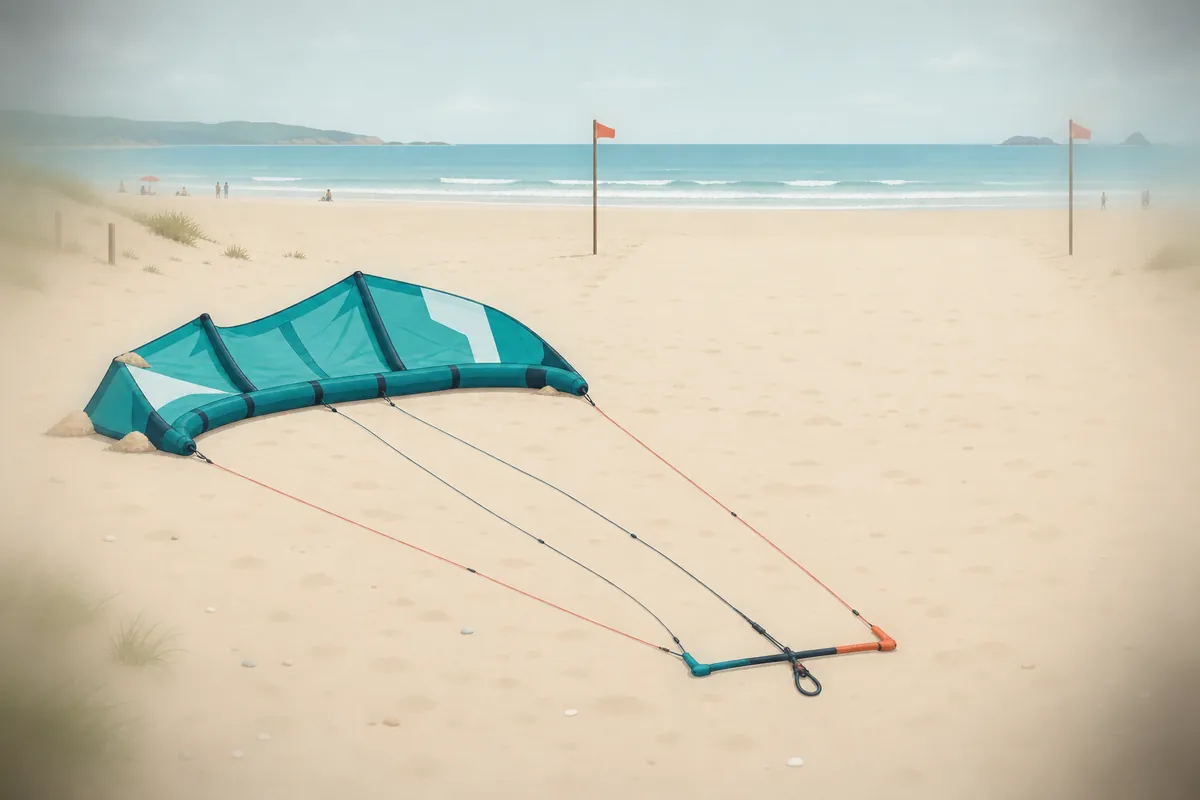
Most established spots keep a corridor for launching and landing, sometimes marked, more often just known. Learn it before you pump. At Tarifa, lifeguards run a marked kite zone and a flag system at Los Lances and Balneario through high summer to keep kites away from sunbathers, and riding outside the marked zone in July or August gets you moved on.
At St. Peter-Ording the riding is corralled into zones inside the beach's five communities rather than spread along all 12 km of sand. Where a spot has rules like these, the spot page carries them: 1,314 of the 1,504 spots in the atlas hold a dated rules-and-access note, next to the launch description and the schools nearby. The conventions elsewhere:
- Set up and launch well away from bystanders, at least 50 m from sunbathers, walkers and children; the same rule is written as 150 ft in US guidance. A kite that loops out of control at launch covers that distance in about a second.
- Keep the launch corridor clear. Launch, then go. Land, then clear out. Standing in the lane chatting with a kite at the zenith blocks everyone and parks a powered kite over people's heads.
- Never fly your kite over people, and never park it at the zenith on a crowded beach: the zenith is the lofting position. Keep the kite grounded or low whenever you are not actively launching or landing.
- If the spot has a designated teaching or beginner zone, stay out of it when you are free-riding. Students on lessons have a right to their protected water.
Don't park your kite in the way
The beach is shared real estate. Once your kite is down:
- Secure it immediately, nose into the wind, with a good load of sand on the windward tip of the canopy (never on the trailing edge, and don't drag sand across the canopy fabric), or use the leash and anchor points provided.
- Roll up or daisy-chain your lines if you are leaving the kite for more than a few minutes. Twenty metres of near-invisible line stretched across the walking path is a trip hazard and a tangle magnet.
- Move your kite out of the launch lane and above the high-tide line. At narrow spots the rule of thumb is that the beach belongs to kites in transit; parked kites belong at the back, packed tightly together.
More from Rules & Etiquette
The other articles in this chapter- Kitesurfing right of way rules
- Where to rig, launch and park your kite
- Kitesurfing hand signals for launching and landing
The Fundamentals · Learning the Sport · The Gear · Buying Gear & Keeping It Alive · Tech & Innovation · Wind, Weather & Water · Safety & Risk · When Things Go Wrong · Rules & Etiquette · Advanced Riding · Spots of the World · Practical Tricks & Life Hacks · The Video Library · Field Notes & Extras