Map›Guides›Field Notes & Extras›What kitesurfing costs in the first year and afterField Notes & Extras
On this page
The Kitesurfing Compendium · Field Notes & Extras
What kitesurfing costs in the first year and after
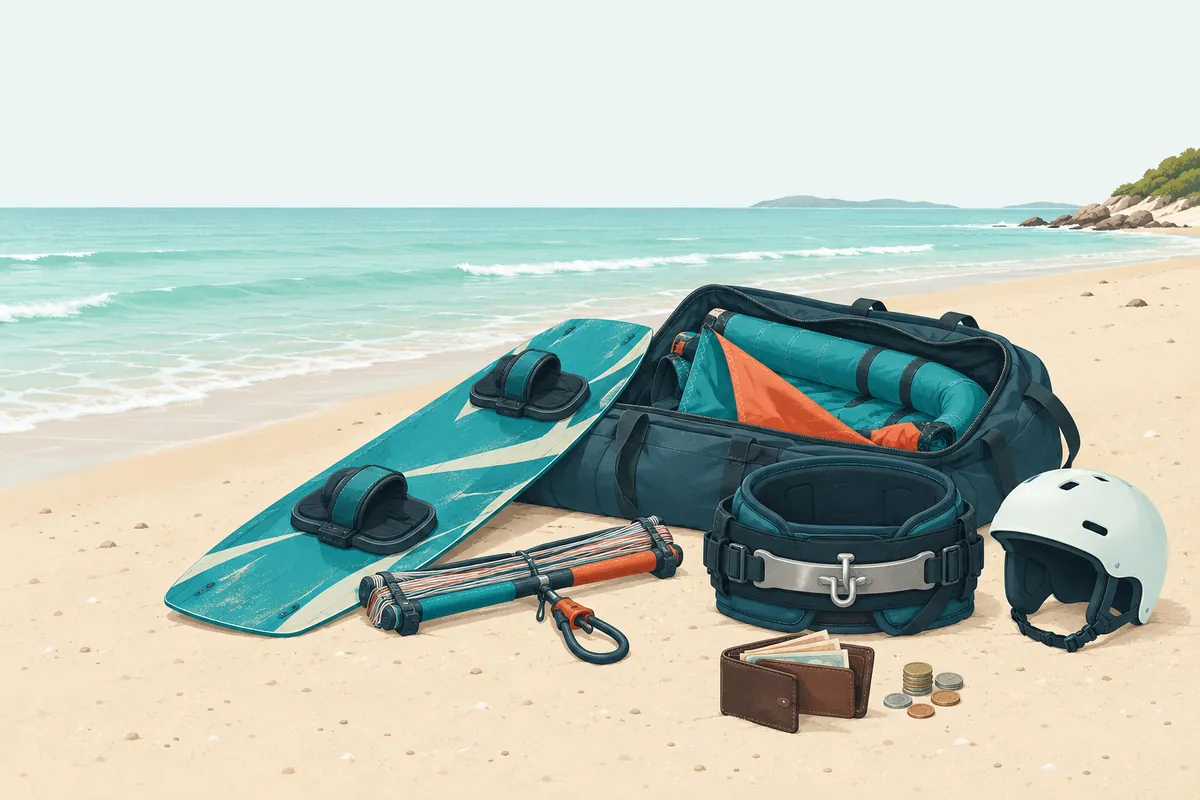
A realistic first year of kitesurfing costs about $1,500–2,800 in 2026 with used hardware and new safety gear, lessons included. After that, depreciation and travel dominate the running cost, not repairs. The buying chapter prices the gear item by item; this is the lifetime picture.
| Year-one item | Typical range, 2026 | Notes |
|---|---|---|
| Beginner course, 9–10 hours to independence | $400–700 | €350–550 in Western Europe, €300–500 in Egypt, Morocco and Cape Verde. The one item never to economise on |
| Used kite with bar, three to four years old | $500–900 | Add a pump and small parts at about $50 each in 2026 |
| Used twintip board | $100–300 | Bigger is better for year one |
| Harness, wetsuit, helmet, impact vest, leash | $400–700 | Buy the harness and wetsuit new, because fit matters |
| Insurance, club membership, first repairs | $100–200 | Liability cover is not optional |
| Realistic year-one total | $1,500–2,800 | Counting used hardware and new safety and fit items. The $2,500–4,000 (2026) figure quoted elsewhere assumes a new kite instead of a used one |
School prices are on the school listings rather than in your head: 872 of the 1,680 school records in the atlas publish a dated price, most of them for 2026, and among those quoting a three-hour lesson in euros the middle of the range sits near €140 in 2026.
The depreciation curve is steep then flat. A kite is worth about 60% of retail after one year, whatever its condition, loses another 5–10% a year through years two to four, then flattens near a floor of $200–350 in 2026 for anything still flyable. Buying at one to three years old and selling at four is how riders effectively rent near-current gear for a couple of hundred dollars a season.
Add a wetsuit every two to four seasons, occasional bladder and line repairs, insurance, and travel, which for most riders becomes the biggest line of all. Run the cost per session: a $1,500 all-in year over 50 sessions is $30 a session in 2026, about a lift ticket, for a sport with no lift queue.
The sponsorship reality
A note for ambitious riders and their parents: almost nobody gets paid to kitesurf. Even strong national-level riders hold flow deals, free or discounted gear in exchange for content and visibility, not salaries. The handful of salaried professionals sit at the very top of the world tours. Chase sponsorship because you love riding and making video, never as a financial plan.
More from Field Notes & Extras
The other articles in this chapter
- 1 Why does kite power increase with the square of wind speed?
- 2 Kitesurfing competitions and the pro tour
- 3 Kitesurfing insurance and liability
- 4 Kitesurfing fitness and injury prevention
- 5 First aid on the beach and in the water
- 6 Beach access, wildlife rules and how spots get banned
- 7 Planning a kite trip, from airline boardbag rules to camps and downwinders
- 8 What kitesurfing costs in the first year and afterYou are here
- 9 Kitesurfing history, community and jargon
- Read the full chapter: Field Notes & Extras