Map › Guides › Field Notes & Extras › First aid on the beach and in the water
The Kitesurfing Compendium · Field Notes & Extras
First aid on the beach and in the water
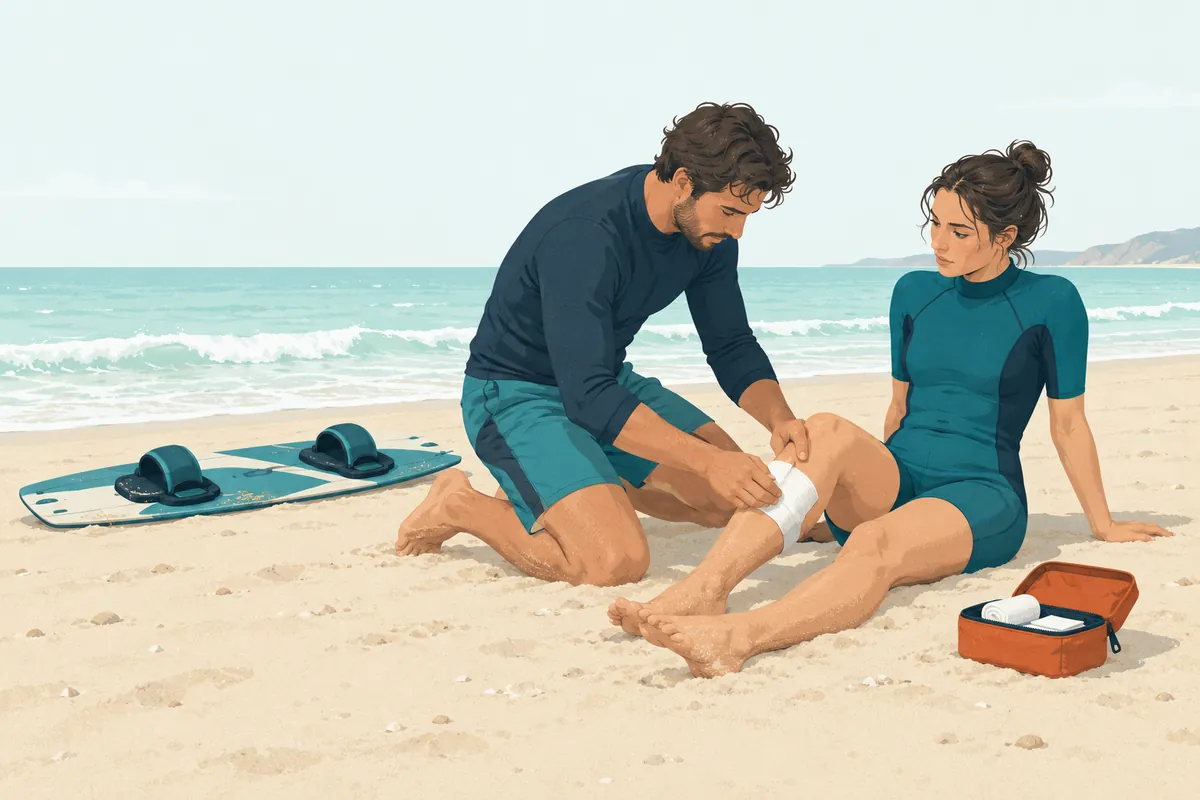
Sooner or later you will be the nearest person to someone else's kitesurfing accident, and the minutes before professional rescue arrives are yours to use. The self-rescue chapter covers saving yourself. This is what to do for somebody else.
- Make the scene safe before you touch anyone. A casualty attached to a powered kite is two emergencies. Approach from upwind of the lines, never through them, because a gust turns slack lines into cheese wire.
- Kill the power for them. Activate their quick release: push away or pull the chicken-loop release so the kite flags out on the safety leash. If the kite is still dragging them, release the leash entirely and let the kite go. Gear is replaceable.
- Cut lines only as a last resort. If someone is entangled and being dragged, use a hook knife, which is why you carry one on your harness. Cut one line at a time and keep your own limbs clear.
- Assess the casualty. Unconscious in shorebreak: get them onto firm sand, airway first, check breathing. Not breathing: start CPR immediately and shout for someone else to call emergency services. Do not leave to make the call yourself if other people are present.
- Call rescue with a real position. Beach names are ambiguous. Latitude and longitude from any phone's compass app, or a three-word address from a location app, gets a helicopter or lifeboat to the right hundred metres. State: number of casualties, condition, wind and sea state, and whether kites are still flying in the area.
- Watch anyone who nearly drowned. Someone who inhaled water can deteriorate hours later. Persistent coughing, laboured breathing, unusual fatigue or confusion after a near-drowning means hospital, every time, even if they insist they are fine.
The smaller emergencies
- Weever fish and jellyfish stings: weever stings, picked up barefoot in sandy European shallows, are treated by immersing the foot in water as hot as the casualty can tolerate, around 40–45 °C, for 30 to 90 minutes. Jellyfish: rinse with seawater rather than fresh, lift tentacles off with tweezers, and seek help for chest pain or breathing trouble.
- Hypothermia: core temperature below about 35 °C brings confusion, fumbling hands and loss of coordination, and it degrades judgement before it degrades muscle. The stages run from shivering and clumsiness, through slurred speech and confusion, to shivering stopping altogether and drowsiness, which is a medical emergency. Strip the wet neoprene, insulate, warm gradually. No alcohol and no vigorous rubbing of limbs.
More from Field Notes & Extras
The other articles in this chapter- Why does kite power increase with the square of wind speed?
- Kitesurfing competitions and the pro tour
- Kitesurfing insurance and liability
- Kitesurfing fitness and injury prevention
- First aid on the beach and in the water
- Beach access, wildlife rules and how spots get banned
- Flying with kite gear and planning kite trips
- How much does kitesurfing cost?
- Kitesurfing history, community and jargon
The Fundamentals · Learning the Sport · The Gear · Buying Gear & Keeping It Alive · Tech & Innovation · Wind, Weather & Water · Safety & Risk · When Things Go Wrong · Rules & Etiquette · Advanced Riding · Spots of the World · Practical Tricks & Life Hacks · The Video Library · Field Notes & Extras