Map › Guides › When Things Go Wrong › What to do if a current or offshore wind pulls you out to sea
The Kitesurfing Compendium · When Things Go Wrong
What to do if a current or offshore wind pulls you out to sea
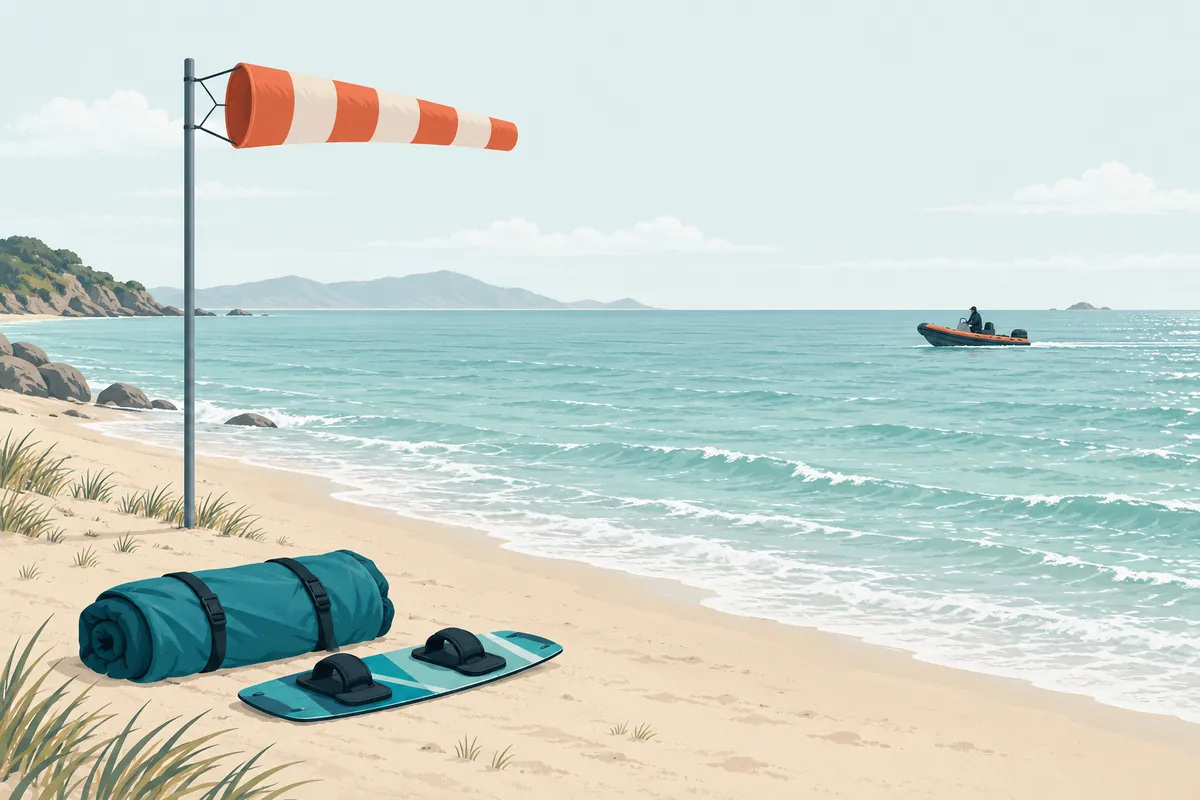
Spots that live with offshore wind organise around that rule. At Soma Bay the wind blows off the land almost everywhere in the bay, so every station runs a rescue boat and charges for it on top of the lessons.
Where riders disagree about a spot, the disagreement is the warning: at Cabo de la Vela the wind is offshore in the bay at dawn and swings side-shore by mid-morning, and the regulars call it safe because there is land downwind and the bay is busy with fishermen, while others point to thin rescue cover and 40-knot days.
In May 2023 a rider went missing eight kilometres south of the village and was never found.
If you are being carried out despite all of that:
- Assess honestly and early. Are you making ground toward shore, holding position, or losing? Losing ground for ten minutes means you'll be losing ground in an hour, only far more tired.
- If the kite still flies, stay powered. Ride or body-drag on the most direct safe line to land, even a beach far downwind of your launch. Distance along the shore is a walk; distance from the shore is a swim.
- If the kite won't fly and the wind has any onshore component, self-rescue sail as described above.
- In a rip current, common at surf beaches, do what a swimmer would: don't fight it head-on. Rips are typically narrow, so sail or drag across the current, parallel to the beach, until you are out of it, then head in. Cape Town - Blouberg/Big Bay is the standard case, and its destination page flags shore break and rip currents there as more serious than they look from the beach.
- In true offshore wind with no boat, deflate the leading edge (struts inflated), roll the kite around itself, bind it with your harness, and paddle it toward shore like a surfboard. Expect well under 1 knot of progress, which is why the rule is prevention. If you are far out, the wind is building and land is unreachable, stay with the kite as a raft and signal for rescue. Abandon gear only if the kite itself is dragging you into worse danger and the shore is close enough to swim.
- Tell someone your plan before every session, and carry a phone in a waterproof pouch, or a VHF radio on exposed coastlines.
More from When Things Go Wrong
The other articles in this chapter- How to relaunch a kite from the water
- How to do a kitesurfing self-rescue in deep water
- What to do if a current or offshore wind pulls you out to sea
The Fundamentals · Learning the Sport · The Gear · Buying Gear & Keeping It Alive · Tech & Innovation · Wind, Weather & Water · Safety & Risk · When Things Go Wrong · Rules & Etiquette · Advanced Riding · Spots of the World · Practical Tricks & Life Hacks · The Video Library · Field Notes & Extras