Map › Guides › Practical Tricks & Life Hacks › Best sunscreen for kitesurfing, and how often to reapply
The Kitesurfing Compendium · Practical Tricks & Life Hacks
Best sunscreen for kitesurfing, and how often to reapply
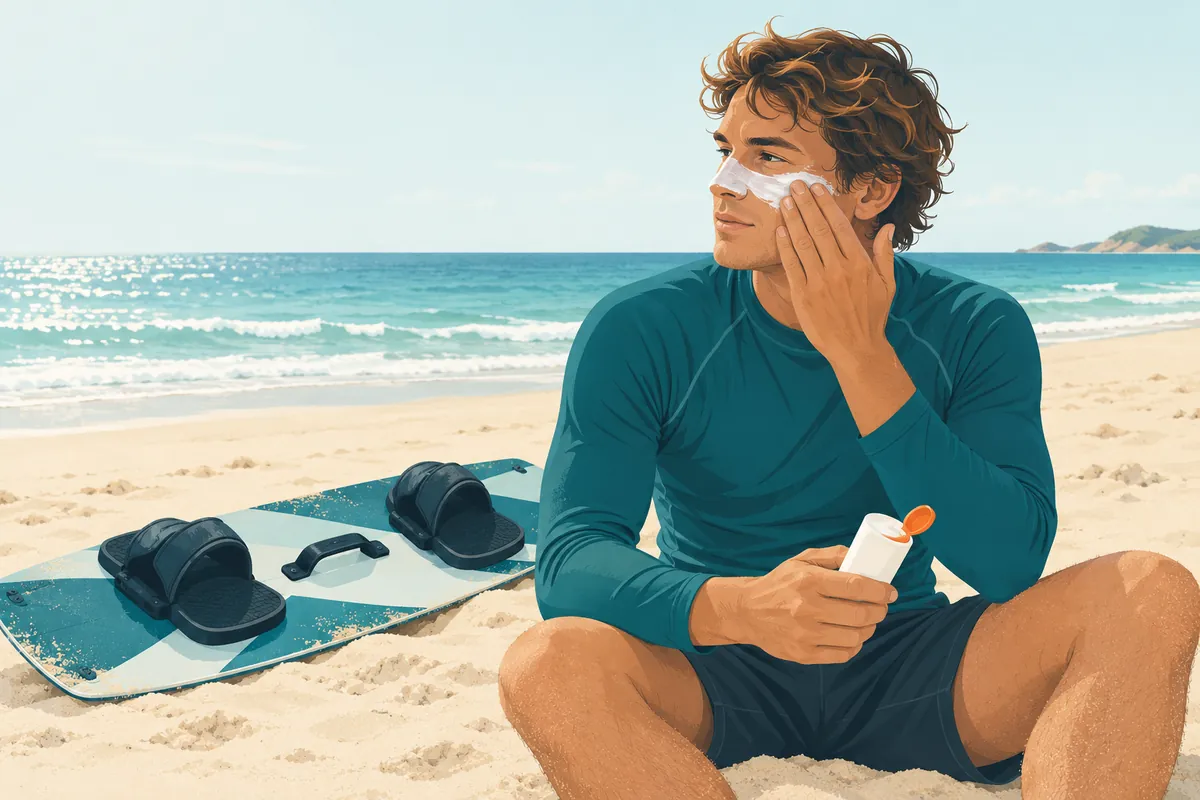
Three hours on the water is three hours of direct sun plus reflection off the surface. Chemical sunscreens largely rinse off. Mineral (zinc oxide) sunscreen sits on the skin as a physical barrier, reflects UVA and UVB, resists washing off, is less likely to sting the eyes, and is generally reef-safe. The system that works:
- Face: a zinc stick (SPF 50, often tinted) on nose, cheekbones, ears and forehead before the session. Sticks survive water far better than lotions, and you can reapply one on the beach with sandy hands without turning it into paste.
- Lips: a dedicated SPF 30–50 lip balm, reapplied every time you come in. Burned, cracked lips are one of the most common kite-trip complaints and one of the easiest to prevent.
- Body: cover instead of cream wherever you can. Long-sleeve UPF lycra, boardshorts over it, a suit in cooler water. Cream only the gaps: hands, neck, backs of the knees, and the tops of the feet, a painful omission for strapless riders.
- Reapplication: broad spectrum, SPF 30 minimum, is the dermatologist floor. Reapply every 60–90 minutes of session time, and always after towelling off. Almost any decent product works if reapplied. None works applied once at 10 a.m.
- Head: a cap, a surf hat with a chin strap, or a helmet. A light-coloured cap under strong sun also cuts fatigue noticeably on long sessions. In tropical destinations many instructors refuse to teach without headwear.
In warm water the lycra is the whole defence. Cumbuco runs 26–29 °C and nobody wears rubber there, so a long-sleeve top and a zinc stick is the entire system for a week of six-hour days.
Sunglasses for kitesurfing
Your eyes take a double dose from direct and reflected UV, and long-term exposure contributes to pterygium, "surfer's eye". The options, in ascending order of commitment:
- Cheap polarized plus a retainer. A €20–40 pair (2026) of polarized sports sunglasses on a neoprene floating retainer strap. You will eventually donate a pair to the sea; the retainer postpones that day considerably.
- Watersports-specific eyewear (Ocean, LiP, SeaSpecs and similar, roughly €50–150 in 2026): floating frames with air chambers in the temples, hydrophobic coatings, vents that resist fogging, rubber nose and temple grips that get stickier when wet, plus a leash. Polarized lenses cut glare enough to change how far upwind you can read the water.
- Prescription. Several watersports brands offer inserts or direct Rx lenses. Daily contacts under sport sunglasses work too, but carry spares and rewetting drops, and close your eyes on crashes.
More from Practical Tricks & Life Hacks
The other articles in this chapter- What wetsuit thickness for the water temperature?
- Best sunscreen for kitesurfing, and how often to reapply
- Booties, ear plugs and the injuries that actually happen
- Flying with kite gear: what airlines charge for a kite bag
- How to make kite gear last longer
The Fundamentals · Learning the Sport · The Gear · Buying Gear & Keeping It Alive · Tech & Innovation · Wind, Weather & Water · Safety & Risk · When Things Go Wrong · Rules & Etiquette · Advanced Riding · Spots of the World · Practical Tricks & Life Hacks · The Video Library · Field Notes & Extras