Tūja
1Wind and kite size
Indicative, read off the wind statistics rather than a local size log: with monthly…
Direction
Direction to shore
cross-on
Dominant direction
SW; W-NW also works.
Kite sizes
metres · typical quiver highlighted
The quiver, in words
Indicative, read off the wind statistics rather than a local size log: with monthly averages of 8-10 kt in June, July and August, a 75-85 kg rider is on 13-15 m or a foil for most summer days, and 9-12 m when a front lifts it to 18-22 kt.October to April averages 11-16 kt and the stronger blows are 8-10 m weather. No local rider sizes are published for this beach.
Character
synoptic
Average strength
8-16 kt monthly average depending on season: summer averages 8-10 kt, October-April 11-16 kt.
Typical strength
Rideable sessions need roughly 12 kt and up. Monthly averages run 8-10 kt in June-August and 11-16 kt from October to April, with about 16-20 days a month over 12 kt in high summer against 25-30 a month in winter.
Forecast
Live forecast
2Where to launch
Beach launch by/through the Jūrasdzeņi camping area at Tūja, with paid parking and a summer…
three ways on to the water, and what each one asks of you
Launch
Beach launch by/through the Jūrasdzeņi camping area at Tūja, with paid parking and a summer cafe; GPS 57.489581, 24.385368, directly by the Baltic Sea.
With a school or a boat
No school listed here
Nobody is listed as teaching or running a boat here.
On your own
Room to launch: huge
Somewhere else
5 spots nearby
3Rules and hazards
2026: No Tūja-specific kitesurf permit, kite zone, or seasonal kite ban is published.
Rules & access
1 min read
Access rules drift faster than anything else we hold — check locally, and propose an edit if this has changed.
4Schools and rescue
No lifeguard post, rescue boat or paid rescue contact is known for Tūja in 2026.
Rescue
No school listed here.
5If it is not working here
Vitrupe 16 km, Saulkrasti / Koklītes 22 km. Beach time, swimming, SUP/boats, cycling, fishing, walking…
Beach time, swimming, SUP/boats, cycling, fishing, walking the two piers, visiting nearby red cliffs/old pier remains, and short coastal trips toward Kurmrags lighthouse or Saulkrasti/Salacgrīva.
Backup spots Where riders go when the wind doesn't work here.
- Saulkrasti
- Skulte/Vārzas no page yet
- Ainaži no page yet
Riding essentials
Season
May–Oct
Best months
How windy
8-10 kt
Character: synoptic
Room to launch
huge
rules and access below
Water
mixed
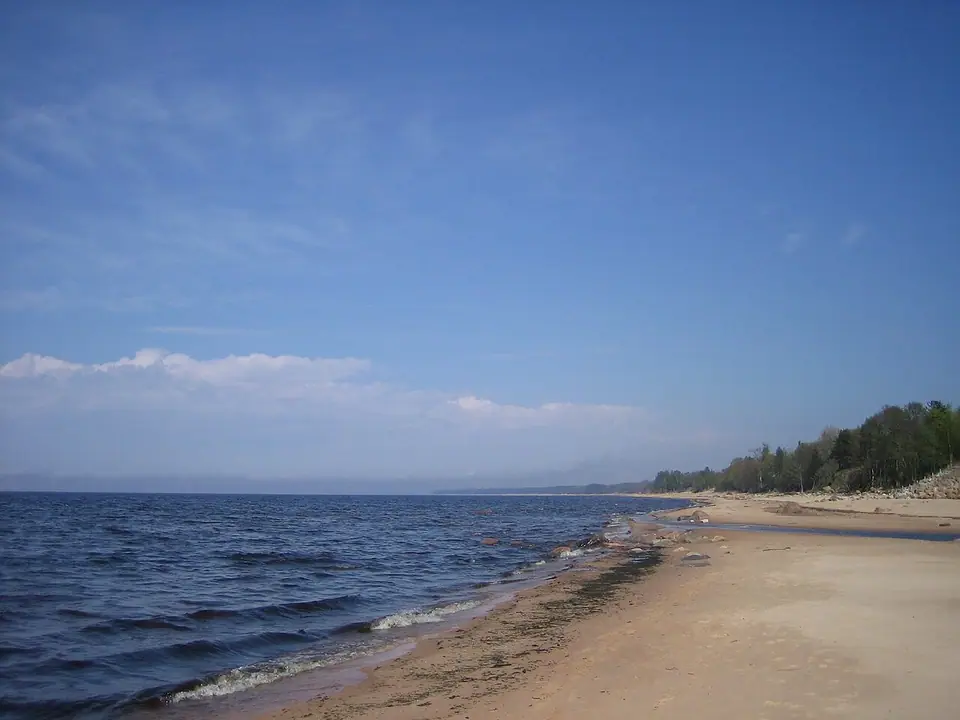
Open Gulf of Riga beach with small-to-medium wind waves
Hazards
5
Reported by riders
Level
Intermediate to advanced
With a caveat: see Your level
Crowds
medium crowds · busy June July August
Schools
none named here
From the airport
80 min
RIX Riga Airport
When it fills in
There is no daily thermal fill to wait for. The wind is frontal, so it can already be on at first light or arrive mid-afternoon, and the session gets timed off the forecast rather than the clock. Indicative, not a local measurement.
The spot
Tūja is an open-coast Baltic spot on the Vidzeme side of the Gulf of Riga, and the easiest…
The water
Mixed. Full wetsuit in summer for most riders; thick winter…
Type
mixed
Tides
No useful astronomical tide range. What matters is water level: high water rides cleanly, low water puts the shore stones back in play and turns the entry into a stone-picking exercise. Check the level with the wind before you drive.
Temperature
Summer (°C) July-August averages about 18.6–19.3 °C; the broader summer average is about 17.6 °C.
Winter (°C) Winter average about 2.5 °C; February average about 0.6 °C.
Modelled monthly average: 1–20 °C
Wetsuit
Full wetsuit in summer for most riders; thick winter suit/dry suit, hood, gloves and boots outside the warmest months.
Conditions
Who it suits
Not for beginners. Intermediate is the working minimum.
Your level
not for beginners here
The scene
What riders come here for
Month by month
May–Oct. Modelled 10–16 kn across the year.
- Jan
- Feb
- Mar
- Apr
- May
- Jun
- Jul
- Aug
- Sep
- Oct
- Nov
- Dec
riding season given for this spot · no wind series here is reliable enough to name a season
- Jan66
- Feb51
- Mar44
- Apr27
- May, riders' month21
- Jun, riders' month27
- Jul, riders' month35
- Aug, riders' month29
- Sep, riders' month30
- Oct, riders' month58
- Nov57
- Dec52
windy days per month (3 h+ at 12 kn+)
Ringed months are the best ones according to riders and schools: May, Jun, Jul, Aug, Sep, Oct.
Our wind model misses this spot's wind
The model puts wind on only 66% of days, even in its best month, which does not match the season and the wind strength riders and schools report here. That is why the bars are hatched instead of coloured: go by the ringed months, the ones riders name.
Modelled from the operational forecast archive at 1.5–7 km (2023-2024), daylight hours only, not a ground station: it resolves thermal, lake and valley winds far better than coarse reanalysis but still tends to understate a strong local thermal.
Every figure, month by monthWindy days · Force 4+ · 12 kn or more · Knots · Wind from · Peaks at · Air · Water · Readings
| Month | Windy days | Force 4+ | 12 kn or more | Knots | Wind from | Peaks at | Air | Water | Readings |
|---|---|---|---|---|---|---|---|---|---|
| Jan | 66% | 74% | 69% | 15.1 kt | S | 12:00 | -2.1 °C | 1.3 °C | 62 |
| Feb | 51% | 72% | 60% | 14 kt | S | 12:00 | -0.1 °C | 0.5 °C | 57 |
| Mar | 44% | 60% | 53% | 12.6 kt | S | 11:00 | 1.6 °C | 1.3 °C | 62 |
| Apr | 27% | 50% | 38% | 11.5 kt | NNW | 14:00 | 6.5 °C | 5 °C | 60 |
| May | 21% | 42% | 32% | 10.4 kt | NW | 13:00 | 12.2 °C | 11.4 °C | 62 |
| Jun | 27% | 45% | 40% | 11.1 kt | NNW | 14:00 | 17.2 °C | 17.1 °C | 60 |
| Jul | 35% | 60% | 55% | 12.8 kt | SW | 14:00 | 18.1 °C | 19.9 °C | 62 |
| Aug | 29% | 44% | 37% | 11.7 kt | WNW | 11:00 | 19 °C | 20.1 °C | 62 |
| Sep | 30% | 45% | 35% | 11.2 kt | SSW | 11:00 | 14.4 °C | 19 °C | 60 |
| Oct | 58% | 69% | 63% | 15 kt | S | 12:00 | 8.7 °C | 13.6 °C | 62 |
| Nov | 57% | 67% | 63% | 15.5 kt | SW | 11:00 | 3.3 °C | 8.3 °C | 60 |
| Dec | 52% | 66% | 60% | 14.7 kt | SSW | 13:00 | -0.5 °C | 4.3 °C | 62 |
About these figuresriders' months · 2023-2024
These are the best months according to riders and schools. The wind model reads lower here, so both are shown rather than averaged.
A windy day has at least three consecutive daylight hours at 12 knots or more. The typical daily max and the direction are columns of the table above, month by month. Highlighted months are the riding season given for this spot.
High-resolution weather model (modelled) · Open-Meteo historical forecast archive — best-match operational model (ICON-D2 / AROME / ICON-EU / GFS by region), not a ground station · 2023-2024
Rider tips
Check wind direction and water level together; low water turns the shore stones into a…6
- Check wind direction and water level together; low water turns the shore stones into a session-killer.
- Launch from the Jūrasdzeņi side for the easiest logistics, and keep clear of the old pier stones.
- Pack booties. You will not know the state of the entry until you are standing in it.
- In July and August treat the beach as shared and set up well away from swimmers and families.
- For foiling, plan to ride out to deeper water instead of working the inside.
- Check the posted beach-sector signs during the 15 May-15 September bathing season.
Getting there
RIX Riga Airport
Airport
RIX Riga Airport
Route
Tūja is about 75 km from Riga via the Tallinn highway past Saulkrasti, then the Limbaži road turn. Buses to Tūja take about 1.5 hours and cost less than EUR 4.
Transfer
80 min
Cost level
medium
Staying
Several campsites and apartments in Tūja; Jūrasdzeņi and Krimalnieki are the best-known campsites. Jūrasdzeņi has apartments and cabins, caravan areas, tent space, a beach grill bar, and parking for at least 200 cars in 2026.
FAQ
Is Tūja suitable for beginners?4
Is Tūja suitable for beginners?
No, intermediate is the supported minimum because of a rocky variable bottom, water-level sensitivity and open-sea waves, so it is not a default beginner beach.
What is the wind like at Tūja?
Southwest is the main direction, with west and northwest also reported as working, and monthly averages ranging from about 8 knots in July to 16 knots in January and December.
What hazards should riders know about?
Stones and rocky bottom are exposed at low water, there are old pier remains near Jūrasdzeņi, and beach users are present in warm summer weather.
When is the best time to kite at Tūja?
May to October is the practical season, while October-April is windier but requires serious cold-water gear.
Photos
1

On this page
Also near here
straight-line distance
Straight-line distances, not roads.
Limbažu novads · Baltic coast, near Saulkrasti. also known as Tūja Beach, Tūjas pludmale
Last updated: August 2026