1Wind and kite size
No measurement for this beach.
Direction
Direction to shore
The sand faces roughly north, with southerly the offshore wind here, so the northeasterly that turns Xivares into a kite spot arrives across the beach from the right as you look out to sea: side-onshore.
Kite sizes
metres · typical quiver highlighted
The quiver, in words
Unreported for Xivares. On the regional wind range a 75-85 kg rider brings 12 m for a moderate northeasterly and 9-10 m for the strong autumn and winter days that carry the swell this beach wants. Light-wind sizes are wasted: the low-tide window and the waves decide the session, not the marginal days.Indicative.
Character
mixed
Typical strength
No measurement for this beach. The Gijon coast a few kilometres east counts about 125 days a year at 12 kt or more, most of them November to April, and a working northeasterly here runs roughly 15-25 kt. Regional and indicative.
Forecast
Live forecast
2Where to launch
Rig on the sandy beach only at low tide, when Xivares, Peña María and Aboño join into a…
three ways on to the water, and what each one asks of you
Launch
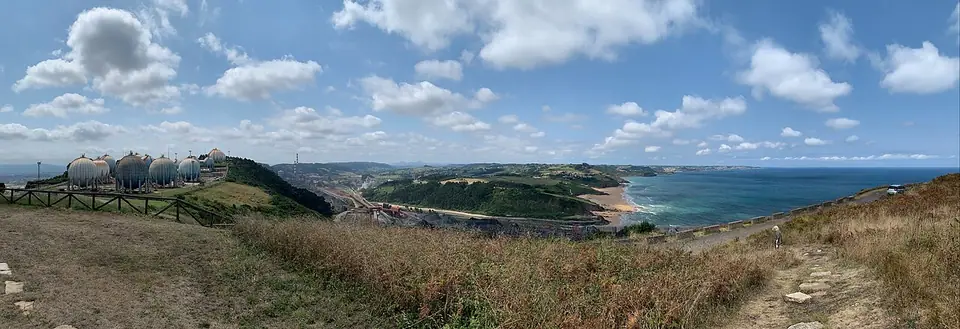
Rig on the sandy beach only at low tide, when Xivares, Peña María and Aboño join into a wider arenal.
With a school or a boat
3 schools work here
On your own
Room to launch: broad at low tide; very limited at high tide
Somewhere else
6 spots nearby
3Rules and hazards
2026: navigation is reportedly prohibited in summer, and Xivares is navigable only at low…
Rules & access
1 min read
Access rules drift faster than anything else we hold — check locally, and propose an edit if this has changed.
4Schools and rescue
3 schools ride here. Daily lifeguard cover from 15 June to 8 September (2026), from a…
Rescue
3 schools ride here
5If it is not working here
Playa del Arbeyal 3 km, Playa de Poniente 4 km. Surf, bodyboard, paddle surf, fishing, coastal walks toward…
Surf, bodyboard, paddle surf, fishing, coastal walks toward Aboño/Campa de Torres, Gijón, Candás and Avilés.
Backup spots Where riders go when the wind doesn't work here.
- Luanco no page yet
- Salinas no page yet
- San Juan de Nieva no page yet
 The bigger pictureEverything about Gijon
Riding essentials
Season
autumn, winter
Best months
How windy
15-25 kt
Character: mixed
Room to launch
broad at low tide; very limited at high tide
rules and access below
Water
ocean beach break
20 °C in summerSemi-urban system of three coves, Xivares, Peña María and Aboño, joining into about 800 m of sand at low tide
Hazards
8
Reported by riders
Level
Advanced only
With a caveat: see Your level
Crowds
high crowds · busy Jun Jul Aug Sep
Schools
3
working here
From the airport
Asturias Airport (OVD)
no transfer time published
When it fills in
No onset time is published for this spot.
The spot
Xivares only works at low tide.
Conditions at low tide
Wind and currents
The water
Ocean beach break. 2/2 mm in July-September, 3/2 mm in May-June, 4/3 mm with…
Type
ocean beach break
Tides
Low tide is the whole game: Xivares is navigable only at low water, and high tide leaves next to nothing to rig on. The width changes a lot across the tide, and at low water Xivares joins Aboño.
Temperature
20 °C summer · 12 °C winter
Modelled monthly average: 13–22 °C
Wetsuit
2/2 mm in July-September, 3/2 mm in May-June, 4/3 mm with hood, boots and gloves in November-February.
Currents
Many currents, reportedly.
Conditions
Who it suits
Advanced only. Rated advanced and expert-only for kite.
Your level
not for beginners herenot for intermediates here
The scene
What riders come here for
Month by month
Modelled 9–11 kn across the year.
- Jan34
- Feb36
- Mar40
- Apr33
- May32
- Jun19
- Jul26
- Aug27
- Sep31
- Oct27
- Nov49
- Dec34
per cent of the month at force 4 or more
- 10 ktJan13°
- 10 ktFeb13°
- 11 ktMar14°
- 10 ktApr15°
- 10 ktMay17°
- 9 ktJun19°
- 9 ktJul22°
- 10 ktAug22°
- 10 ktSep20°
- 10 ktOct18°
- 11 ktNov16°
- 10 ktDec14°
avg knots per month · water °C below · season highlighted
Modelled from weather reanalysis on a 10–25 km grid (2022-2024), not a ground station: reliable for trade and synoptic winds, understates thermal sea breezes and valley winds.
Every figure, month by monthForce 4+ · Knots · Wind from · Air · Water
| Month | Force 4+ | Knots | Wind from | Air | Water |
|---|---|---|---|---|---|
| Jan | 34% | 9.9 kt | SSW | 9.3 °C | 13.3 °C |
| Feb | 36% | 10.3 kt | WSW | 9.7 °C | 13.1 °C |
| Mar | 40% | 10.5 kt | WSW | 11.2 °C | 13.5 °C |
| Apr | 33% | 10.1 kt | E | 12.3 °C | 15 °C |
| May | 32% | 9.7 kt | E | 14.6 °C | 16.6 °C |
| Jun | 19% | 8.9 kt | ENE | 17.7 °C | 19.2 °C |
| Jul | 26% | 9.3 kt | ENE | 19.6 °C | 21.6 °C |
| Aug | 27% | 9.6 kt | ENE | 20.3 °C | 22.2 °C |
| Sep | 31% | 9.6 kt | W | 18.3 °C | 19.9 °C |
| Oct | 27% | 9.7 kt | E | 17.2 °C | 18.4 °C |
| Nov | 49% | 11.3 kt | WSW | 13.6 °C | 15.8 °C |
| Dec | 34% | 9.7 kt | SSW | 10.8 °C | 14.2 °C |
How this is modelledmodelled · 2022-2024
A weather model's cell over this place, not a station on it. Good for comparing places, weaker for one beach.
The typical daily max and the direction are columns of the table above, month by month. Highlighted months are the riding season given for this spot.
ERA5 reanalysis grid point (modelled) · Open-Meteo historical weather API — ECMWF ERA5/ERA5-Land reanalysis, not a ground station · 2022-2024
Rider tips
Rig at low tide.8
- Rig at low tide. At high water there is barely a beach left to lay lines on.
- Skip summer unless someone local confirms navigation is allowed that day.
- Check the swell as well as the wind: the peaks need enough sea to break.
- Read the current from the sand before you go in, and pick your exit point first.
- Take the FEVE train to the Xivares halt, about 800 m from the beach, if you would rather not drive out from Gijón.
- Take the FEVE train to the Xivares halt, about 800 m from the beach, if you would rather not drive out from Gijon.
- Lifeguards are on the sand only from 15 June to 8 September, exactly the stretch when navigation is off. Autumn and winter sessions have no cover at all.
- Southerly is the offshore wind on this beach; the northeasterly you want crosses the sand from the right as you look out.
Getting there
Asturias Airport (OVD); the nearest large city for travel is Gijón.
Airport
Asturias Airport (OVD); the nearest large city for travel is Gijón.
Route
About 5 minutes by car from Gijón. The ALSA Gijón-Luanco bus stops about 2 km away, and the FEVE train has a Xivares halt about 800 m from the beach.
Staying
Hotels and restaurants sit in Gijón and Candás rather than at the beach. On the sand there is parking, toilets, showers, a recreation area and hostelry.
FAQ
Is Xivares suitable for beginners?4
Is Xivares suitable for beginners?
No. Xivares is rated advanced/expert-only for kitesurfing, unlike some surf guides that describe it as suitable for all levels.
What is the wind like?
The beach has good orientation for northeast wind, the verified working direction for kiting here.
Does tide matter at Xivares?
Yes. The spot can only be navigated at low tide; at high tide there is hardly any space left to rig.
Are there seasonal restrictions?
Navigation is prohibited in summer, and autumn and winter are documented as the better wave seasons instead.
Photos
1

On this page
Also near here
straight-line distance
Straight-line distances, not roads.
Asturias · Carreno - Gijon west · Xivares. also known as Xivares, Peña Maria, Aboño, Peña María, Xivares 1 y 2
Last updated: August 2026